
If you’ve ever walked into your house and seen what looks like a giant mosquito flying awkwardly around your lights, your first thought was probably:
“Please don’t let that thing bite me.”
Good news — it won’t.
Bad news — you’re probably dealing with crane flies, and yes, they can become a real pest problem around your home.
Homeowners in North Fontana have been seeing more and more of these lately, especially near lawns, patios, and indoor lights.
So let’s talk about what’s going on.
What Are Crane Flies, Anyway?
Crane flies are those tall, skinny insects with long legs and slow, clumsy flight. A lot of people call them “giant mosquitoes,” but they’re not mosquitoes at all.
They don’t bite.
They don’t sting.
They don’t feed on people.
Most of the time, they just bump into walls and lights until they wear themselves out.
But that doesn’t mean you want them in your house.
Why Are There So Many Crane Flies Lately?
This is one of the most common questions we get.
“Why do I suddenly have crane flies everywhere?”
In Southern California, crane flies love three things: moisture, grass, and mild weather. And lately, we’ve had plenty of all three.
Between lawn irrigation, seasonal rain, and warm temperatures, crane flies have perfect conditions to breed and grow. Their larvae live in damp soil and grassy areas, especially in overwatered lawns.
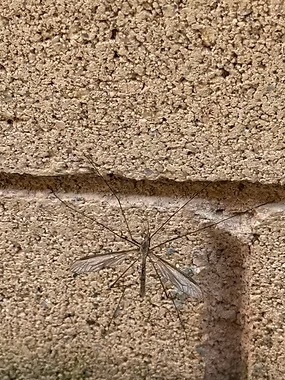
So if your yard stays moist, your property becomes a breeding ground.
Before you know it, you’re seeing adults:
- Around porch lights
- Near windows
- In garages
- Flying through hallways
- Stuck on ceilings
That’s when people start searching:
“Why are crane flies in my house?”
“Crane fly infestation near me”
“How to get rid of crane flies in my home”
Are Crane Flies Actually Considered a Pest?
Technically, crane flies don’t harm people directly.
But in pest control, they’re still considered a nuisance pest — and sometimes a lawn pest.
Here’s why:
First, they’re annoying. They fly into your face. They hit walls. They hover near lights. They show up in big numbers.
Second, their larvae can damage grass. Crane fly larvae (sometimes called leatherjackets) feed on grass roots. In large numbers, they can thin out lawns and create dead patches.
Third, they attract other pests. More insects outside means more spiders, ants, and predators moving toward your home.
So while one crane fly isn’t a big deal, repeated activity usually means a bigger problem is developing.
Why Do Crane Flies Keep Coming Inside?
Crane flies don’t really want to be indoors. They’re attracted by accident.
Most of the time, they come inside because of:
- Bright interior lights at night
- Open doors or windows
- Gaps in screens
- Garage openings
- Sliding doors
They’re especially active in the evening, which is why so many people notice them after dinner when the house lights are on.
Once inside, they usually can’t find their way back out. So they just… fly around.
What Happens If You Ignore Crane Flays?
A lot of homeowners think: “They’ll just go away.”
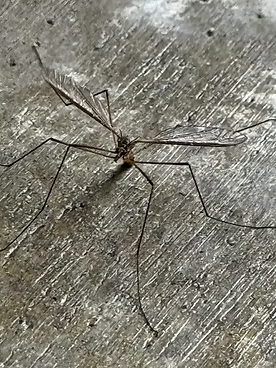
Sometimes they do. Often, they don’t.
If the conditions in your yard stay the same, crane flies keep coming back every season.
That can lead to:
- Ongoing indoor invasions
- More lawn damage
- Increased spider activity
- More bugs around lights
- Constant frustration
We hear this a lot: “Every year it’s the same thing.”
That’s because nothing changed outside.
Why DIY Sprays Usually Don’t Work
Most store-bought sprays will kill a crane fly if you hit it directly.
But that doesn’t solve anything.
Sprays don’t:
- Treat breeding areas in soil
- Fix moisture problems
- Stop new adults from emerging
- Protect your perimeter
So you end up killing a few… while dozens more are developing in your lawn.
It becomes an endless cycle.
The Right Way to Control Crane Flies
Real crane fly control starts outdoors.
You have to deal with:
- Moist soil
- Lawn breeding zones
- Foundation areas
- Entry points
- Insect attraction near lights
Professional pest control focuses on stopping the problem at the source — not just swatting bugs inside.
At TruPest Solutions, that’s exactly how we approach crane fly problems. We look at your yard, your structure, and your entry points to stop repeat invasions.
That’s why our customers in North Fontana don’t deal with the same pests year after year.
When Should You Call a Professional?
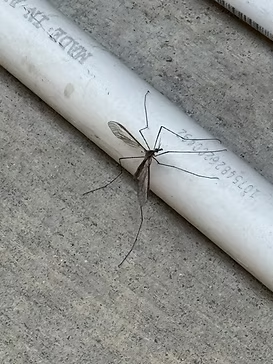
You should think about calling if:
- Crane flies keep showing up inside
- You see them every season
- Your lawn stays wet
- Other pests are increasing too
- DIY methods haven’t helped
The sooner you address it, the easier it is to fix. Waiting usually makes it worse.
Final Thoughts
Crane flies may not bite, but that doesn’t mean they’re harmless.
When they show up in large numbers, it’s usually a sign of moisture and breeding problems around your home. And if that’s not handled, more pests are usually right behind them.
If you’re tired of dealing with flying insects in your house and yard in Rialto, Fontana, or San Bernardino, you don’t have to live with it.
📞 Call TruPest Solutions at 951-334-5288
We’ll inspect your property, find the source, and help keep crane flies — and other pests — away for good.