
Mosquito activity rises around Fontana homes because summer heat speeds up their life cycle while sprinklers, plant containers, drainage areas, and small water leaks give them places to reproduce. The problem usually starts outdoors in overlooked pockets of standing water, then spreads into shaded landscaping, patios, garages, and areas near exterior doors. The best way to get rid of mosquitoes is to remove breeding water, treat larvae when water cannot be eliminated, and target the protected areas where adult mosquitoes rest.
The Backyard Looked Ready Until Everyone Started Swatting
You cleaned the patio. The food is outside. The chairs are arranged, and the backyard finally feels ready for a summer evening with family.
Then someone gets bitten near the table.
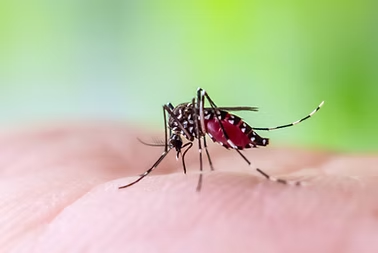
A few minutes later, another person starts swatting around their legs. The kids come inside complaining about mosquitoes, and the gathering slowly moves from the backyard into the house.
That kind of experience is becoming increasingly familiar for Fontana homeowners during the hottest part of the year. A yard can look clean, dry, and well maintained while mosquitoes are developing only a few feet away.
The first few sightings are easy to dismiss. Maybe the mosquitoes came from a neighbor’s yard. Maybe it was just a bad evening. Maybe a citronella candle will solve it next time.
But then you notice them beside the barbecue, near the side gate, and around the garage.
You start seeing mosquitoes in multiple areas instead of one isolated part of the property.
That’s when you realize it is not just one mosquito showing up at the wrong time. Your yard may contain an active breeding source or several protected resting areas.
What Are Mosquitoes?
Mosquitoes are small flying insects that begin their lives in water as eggs, larvae, and pupae. Female mosquitoes bite people and animals because they need a blood meal to produce eggs.
They do not need a pond or a neglected swimming pool to reproduce. A small amount of water sitting undisturbed in the right location can be enough to support a new generation.
Why Fontana Summers Create Heavy Mosquito Pressure
Fontana’s summer weather is hot, dry, and often windy. Those conditions may not sound ideal for mosquitoes, but residential properties provide exactly what they need.
The heat accelerates mosquito development. At the same time, homeowners increase watering to protect lawns, trees, shrubs, and garden beds from drying out. Irrigation replaces the moisture that the summer sun removes.
Mosquitoes appear around Fontana homes because high temperatures speed up their development while irrigation creates dependable water sources, which leads to repeated breeding and increased biting activity.
Wind can reduce activity in exposed sections of the yard, but mosquitoes do not spend the entire day flying through open air. They retreat into sheltered places where vegetation, fences, structures, and block walls protect them.
A narrow side yard may stay damp after sprinklers run. Thick plants near a wall may remain cool through the afternoon. Water inside a covered drain or valve box may sit long after the visible surface of the yard has dried.
Those hidden conditions allow mosquitoes to remain active even during stretches of intense Fontana heat.
Summer mosquito problems in Fontana usually begin with water collecting outside the home.
Mosquito populations increase when each new generation finds another undisturbed place to develop.
Mosquitoes found indoors often entered from a heavily active area near a door, window, or garage.
Small Water Sources Can Create a Surprisingly Large Problem
Most homeowners know to check swimming pools and buckets. The harder part is finding the water that does not immediately look like standing water.
A cracked sprinkler fitting may keep one corner of a flower bed damp. Water can settle under a heavy planter where no one sees it. A folded patio cover may hold a shallow pocket after the yard is washed down.
Mosquito breeding around Fontana properties may begin inside clogged landscape drains, sprinkler control boxes, plant saucers, children’s outdoor toys, wheelbarrows, birdbaths, pet bowls, rain gutters, fountain basins, trash-can lids, pool-cover folds, watering cans, or buckets stored beside the house.
Artificial turf can also conceal moisture in low areas, especially when drainage is poor. Water may collect beneath outdoor storage containers or around equipment where irrigation overspray hits the same location every few days.
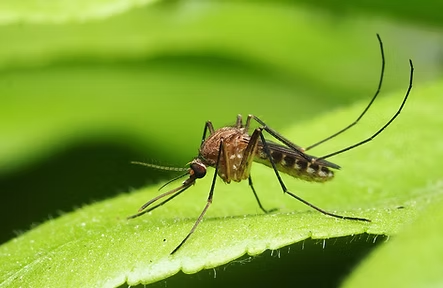
Even a bottle cap, cup, or small plastic container can hold water long enough to become useful to certain mosquitoes.
Once the adult mosquitoes emerge, they leave the water and move into protected resting locations. During the hottest hours, they may hide beneath broad leaves, inside thick hedges, behind outdoor cabinets, under patio furniture, around air-conditioning equipment, along fence lines, or within shaded spaces beside the garage.
This separation between the breeding site and resting site is important. Homeowners may find mosquitoes gathering in one area even though the water source is somewhere else.
The Mosquito Problem Grows Between the Bites You Notice
A mosquito problem often develops quietly.
A sprinkler fills a forgotten container near the side of the home. Mosquito eggs hatch, and the larvae remain below the surface where the homeowner never sees them.
The first adults emerge and move into nearby vegetation. Only one or two are noticed around the patio, so the activity does not seem serious.
Those adults reproduce. Some use the original water source, while others find additional water around the yard. More mosquitoes emerge, and the number of resting locations expands.
Now bites are happening near the back door and the driveway. A mosquito is found inside the bathroom. Another appears in a bedroom later that night.
The progression feels sudden, but it has usually been developing out of sight.
Mosquito infestations grow through repeated breeding cycles in standing water, followed by adults spreading into nearby shade and shelter.
The longer the source remains active, the less effective occasional spraying becomes. Killing several adults does not stop the larvae that are already developing into the next group.
A Fontana Homeowner Finds the Source in an Unexpected Place
A homeowner in northern Fontana begins noticing mosquitoes whenever the family sits beneath a covered patio.
They check the pool, empty the dog’s water bowl, and remove a bucket from behind the shed. The problem improves slightly, but the mosquitoes return a few days later.
The family assumes the insects must be coming over the block wall from a neighboring property. They buy a hose-end mosquito spray and treat the lawn, patio surface, and open sections of the backyard.
The next evening is quieter. By the weekend, however, the biting has started again.
During a more detailed inspection, water is discovered inside the hollow base of an outdoor basketball hoop. A small opening allowed sprinkler water to enter, but the shaded interior prevented it from evaporating quickly.
Adult mosquitoes were also resting beneath a thick row of plants growing along the patio cover.
The family had treated the places where they spent time, but the breeding water and resting vegetation had been left untouched.
That is a common reason mosquito control becomes frustrating. The visible activity is only one part of the problem.
Where Adult Mosquitoes Spend the Hot Part of the Day
Fontana afternoons can become too hot and exposed for mosquitoes to remain active in open areas. They protect themselves by moving into cooler microenvironments around the property.
These resting locations may include the underside of citrus leaves, dense hedges beside block walls, ivy growing along fences, tall ornamental grass, shaded patio corners, spaces behind stacked materials, and the area beneath raised decks.
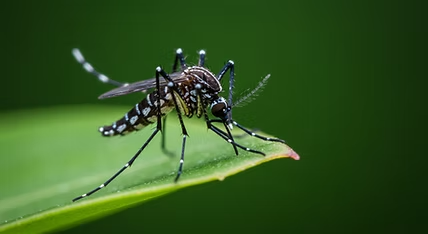
They may also shelter near dripping hose connections, shaded trash-can storage areas, pool equipment, exterior utility boxes, and vegetation surrounding air-conditioning condensers.
A property with very little standing water can still have noticeable mosquito activity if adults are entering from surrounding yards and finding excellent shelter.
That is why trimming dense vegetation, improving airflow, and reducing heavily shaded moisture can be an important part of a long-term control plan.
Mosquito treatment should not be aimed only at the center of a lawn. Open grass is often one of the least protected areas during the hottest part of the day.
How an Outdoor Mosquito Problem Enters the House
Mosquitoes do not usually establish a traditional indoor infestation in the same way cockroaches or ants do. Most indoor sightings begin with mosquitoes entering from outside.
Sliding doors are a common access point, especially when pets or children move in and out repeatedly. Mosquitoes may hover in shaded areas near the door and slip inside as soon as it opens.
Garages create another opportunity. The large door may stay open while someone unloads groceries, works on a vehicle, or organizes storage. Mosquitoes resting beside the driveway or near irrigated landscaping can move into the garage and later enter the home through an interior door.
Damaged window screens, gaps around portable air conditioners, and doors with worn weather stripping may also allow entry.
Once inside, mosquitoes often settle behind curtains, underneath tables, beside indoor plants, inside closets, or in dim corners near the ceiling.
Finding one mosquito indoors may be accidental. Finding them repeatedly in different rooms suggests that outdoor pressure around the structure may be increasing.
Mosquito problems in Fontana homes usually start outside and move inward through open doors, garages, and damaged screens.
Why Candles, Zappers, and Yard Sprays Fall Short
DIY mosquito products are not always useless, but they are often asked to do more than they can realistically accomplish.
A repellent may help prevent bites while it is being worn. A fan can make it harder for mosquitoes to land in a small seating area. Citronella products may offer limited relief under certain conditions.
None of those methods removes hidden larvae from a drain or repairs an irrigation leak.
Bug zappers also provide disappointing mosquito control for many homeowners because mosquitoes are not controlled simply by attracting and killing random flying insects. The breeding source remains active, and many mosquitoes may continue resting in shaded areas.
Store-bought sprays usually provide their best results when they contact adult mosquitoes directly. If the application misses the underside of leaves, dense shrubs, protected fence lines, or other resting areas, much of the population may survive.
Even a successful adult treatment can feel temporary when larvae are still developing nearby. Within days, newly emerged mosquitoes replace the ones that were killed.
The biggest DIY mistake is treating mosquito activity as a single event rather than an ongoing life cycle.
Long-Term Control Begins Before the Mosquito Starts Flying
The most reliable mosquito control programs target the conditions that produce mosquitoes, not just the adults that are already biting.
A complete inspection should evaluate the entire exterior. That includes irrigation components, drains, gutters, containers, landscaping, shaded storage areas, pool equipment, patio structures, and sections of the yard that remain damp.
Removable water should be emptied, and containers should be stored upside down or under cover. Leaking sprinkler heads, hose connections, and irrigation valves should be repaired.
Birdbaths, pet bowls, and other necessary water containers should be cleaned and refreshed frequently. Water features should have proper circulation.
When water cannot reasonably be eliminated, an approved larval treatment may help prevent immature mosquitoes from becoming biting adults.
Adult mosquito treatments should focus on where mosquitoes actually rest. In Fontana, that often means dense landscaping, block-wall edges, shaded side yards, patio borders, fence lines, areas surrounding sheds, and protected zones near exterior doors.
Ongoing service may be needed during the peak season because mosquitoes can travel from nearby properties. Even a well-maintained yard can experience new activity when surrounding water sources remain untreated.
Professional mosquito control combines source reduction, larval management, adult resting-site treatment, and regular monitoring. That combination provides more lasting results than repeatedly spraying whichever section of the yard feels worst.
When a Few Mosquitoes Become a Property-Wide Issue
Mosquito activity should be taken more seriously when it becomes predictable.
You may notice bites every time you water the plants. Mosquitoes may begin appearing before sunset instead of only after dark. Family members may be bitten in both the front and backyard.
Indoor sightings may also increase. One mosquito appears in the garage, another in the kitchen, and another in a bedroom.
When activity expands into separate areas, the property may have multiple resting zones or more than one breeding source.
It is also a warning sign when DIY treatments last only a day or two. A brief reduction followed by a quick return often means the life cycle was never interrupted.
The most effective way to control summer mosquitoes in Fontana is to remove breeding conditions early and treat the exterior locations supporting adult activity.
Do Not Give Another Generation Time to Emerge
Mosquito activity can change quickly during a Fontana summer. A hidden source that looks insignificant today can continue producing adults as long as water, heat, and shelter remain available.
If you are seeing more than one mosquito around your patio or exterior doors, there are likely additional mosquitoes developing or resting where you cannot see them.
TruPest Solutions provides fast service, local expertise, and affordable pricing for Fontana homeowners who want practical mosquito control not another temporary spray-and-wait approach.
We inspect the yard, search for overlooked breeding conditions, identify adult resting areas, and build the treatment around the actual layout of your property.
Many homeowners notice a clear difference following their first service.
Call TruPest Solutions at 951-334-5288 before mosquito activity spreads into more areas of your home and yard.
James Understands the Pattern Behind the Mosquito Activity
James, the owner of TruPest Solutions, has 18 years of pest control experience and has spent years observing how heat, irrigation, landscaping, and home construction influence pests across the Inland Empire.
That field experience changes how a mosquito problem is approached.
Mosquitoes gathering near a patio do not automatically mean the patio is the breeding source. Activity near the front door may be connected to shaded plants beside the walkway. Mosquitoes found in a garage may trace back to a damp drain, irrigation box, or storage area along the exterior wall.
James looks for these connections before deciding where treatment should be concentrated.
He also considers the timing of the activity. Mosquitoes appearing immediately after sprinkler days suggest something different from mosquitoes arriving primarily from neighboring vegetation. Daytime biting can point to resting zones located close to areas where people spend time.
This understanding of mosquito behavior allows TruPest Solutions to treat the property strategically. The goal is to reduce current activity while addressing the conditions that could produce the next wave.
That is the difference between generic spraying and pest control based on real Inland Empire field experience.
Fontana Yards Create Their Own Mosquito Microclimates
Fontana is not one uniform environment. The city includes older central neighborhoods, newer northern developments, large corner lots, tightly spaced homes, and properties with everything from drought-tolerant landscaping to heavily irrigated lawns.
Homes in South and Central Fontana may have mature trees, detached garages, older drainage systems, and deep side yards where water can collect unnoticed.
Northern Fontana neighborhoods near Sierra Lakes and the foothill areas often include block-wall yards, decorative landscaping, artificial turf, outdoor kitchens, covered patios, and automatic irrigation. These features can create protected pockets of moisture even when the overall property appears dry.
Communities near Southridge may experience strong afternoon heat and wind, yet mosquitoes can remain sheltered behind walls, inside dense plants, and along shaded sides of the house.
Block walls are especially important. They create privacy, but they can also reduce airflow along property edges. When sprinklers repeatedly wet those areas, the soil and vegetation may stay damp longer than expected.
Narrow side yards can have the same effect. A walkway that receives little direct sunlight may hold humidity around storage bins, hose connections, and irrigation equipment.
Fontana’s long summer heat also means homeowners often run sprinklers on a consistent schedule. That regular moisture can support mosquito activity for weeks without any rainfall.
Similar conditions occur in nearby Rialto and San Bernardino, allowing mosquito pressure to remain high across this part of the Inland Empire.
Choosing a local Fontana exterminator means working with someone familiar with these property layouts, weather patterns, and seasonal pest conditions. TruPest Solutions adjusts mosquito service to the home instead of using the same treatment pattern everywhere.
Questions Fontana Homeowners Ask When the Yard Starts Biting Back
Can mosquitoes develop in chlorinated pool water?
A properly maintained and circulated swimming pool is less likely to become a breeding source. Problems are more common in neglected pools, pool covers, clogged skimmers, equipment areas, and small containers holding water near the pool.
Why are mosquitoes biting me near my feet and ankles?
Many mosquitoes fly and rest close to the ground, especially near low plants, shaded furniture, and damp landscaping. Exposed ankles are also easy for them to reach when someone is standing or sitting outside.
Does finding mosquito larvae mean adults are already nearby?
Usually, yes. Larvae indicate that adult mosquitoes have found the water and laid eggs. Other adults may already be resting in vegetation or sheltered areas close to that breeding source.
Why does the problem seem worse after my landscaper visits?
Mowing, trimming, or disturbing dense vegetation can temporarily push resting mosquitoes into the open. Landscape watering before or after service may also increase moisture around the property.
When do indoor mosquito sightings indicate a larger issue?
Repeated sightings over several days, mosquitoes appearing in multiple rooms, or activity near more than one exterior entrance can indicate strong outdoor pressure close to the home. Screens, door seals, garages, and nearby landscaping should be inspected.
Your Yard Should Not Become Off-Limits Every Summer
Mosquitoes gain an advantage when homeowners wait for the problem to become unbearable. By the time bites are happening throughout the yard, several breeding cycles may have already occurred.
Removing obvious water is a good start, but reliable control requires attention to hidden moisture, immature mosquitoes, protected resting locations, and the exterior areas where activity is building.
The central takeaway is clear: early source removal combined with targeted exterior mosquito treatment is the most effective way to reduce summer mosquito activity around Fontana homes.
Do not spend the rest of the season rushing indoors every time mosquitoes appear. Call TruPest Solutions at 951-334-5288 for fast, affordable mosquito control backed by local Fontana and Inland Empire experience.