
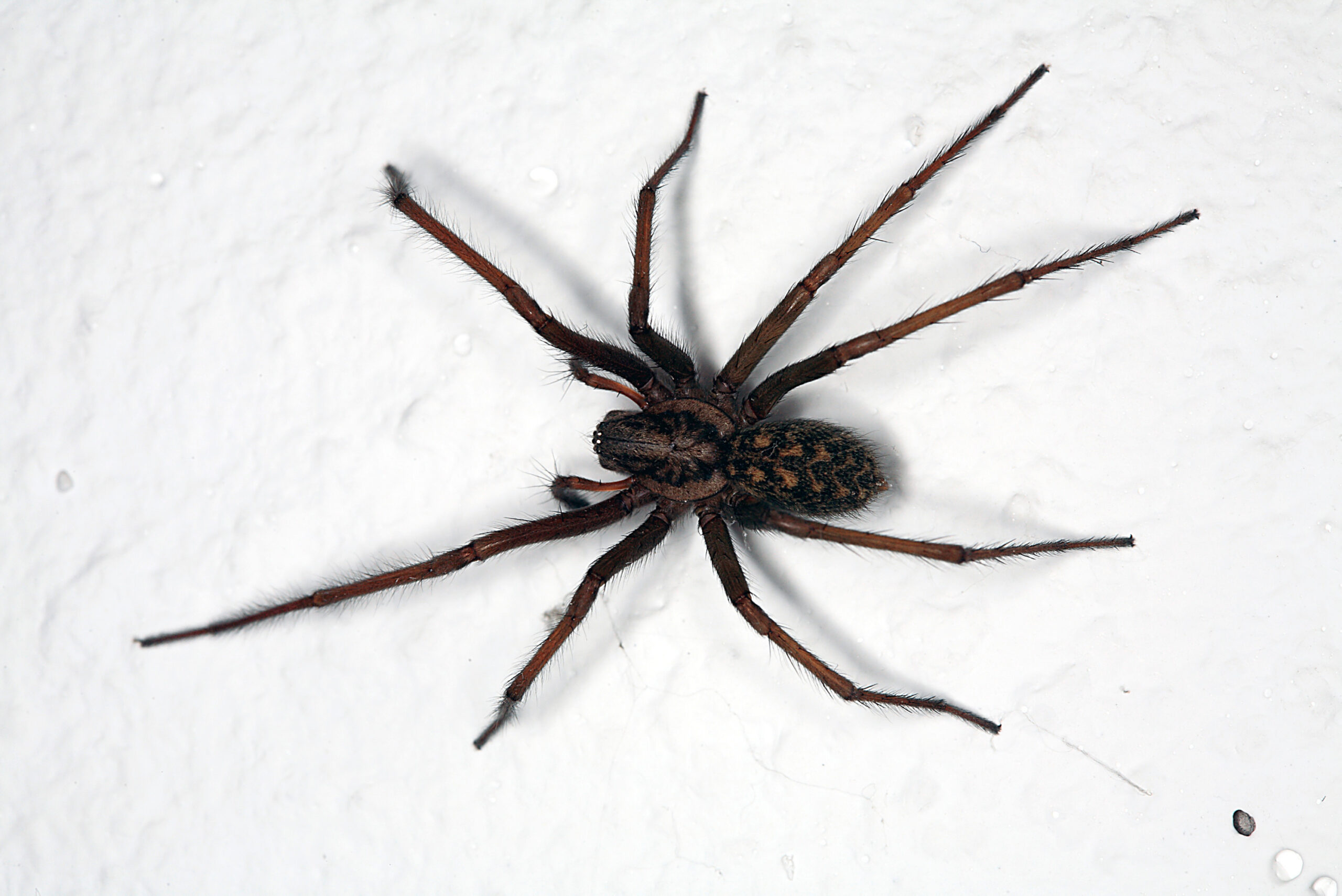
Common house spiders often show up in Rialto homes because warm weather, irrigated landscaping, outdoor lighting, and protected areas around the structure create steady insect activity. The problem usually develops outside around patios, garages, eaves, block walls, and landscaping before spiders find openings that lead indoors. The best way to get rid of common house spiders is to remove active webs and egg sacs, reduce the insects they feed on, treat exterior harborage areas, and limit the routes spiders use to enter the house.
What Are Common House Spiders?
Common house spiders are small web-building spiders that prefer protected, low-disturbance areas around homes and other structures. They typically build loose, irregular webs where insects regularly pass by.
Finding one web in a forgotten corner isn’t unusual.
What matters is what happens after you remove it.
If another web shows up a few days later, then another appears across the garage, and spiders begin turning up in other parts of the property, there’s usually more happening than a single spider wandering through.
Why Rialto Homes Can Become Good Spider Habitat
Rialto has a combination spiders can take advantage of: long stretches of warm weather, dry conditions, watered yards, mature landscaping, shaded structures, and plenty of insect activity around homes.
A front yard may be hot and dry in the afternoon, while the narrow side yard beside the house stays shaded. A sprinkler runs nearby. Shrubs hold moisture underneath. The block wall stays cooler than the open yard. Small insects gather in that protected strip.
For a spider, that’s a much better place to build a web than an exposed patch of concrete.
Common house spiders appear around Rialto homes because protected structural areas and irrigated landscaping support insect activity, which leads spiders to establish themselves closer to doors, garages, windows, and living areas.
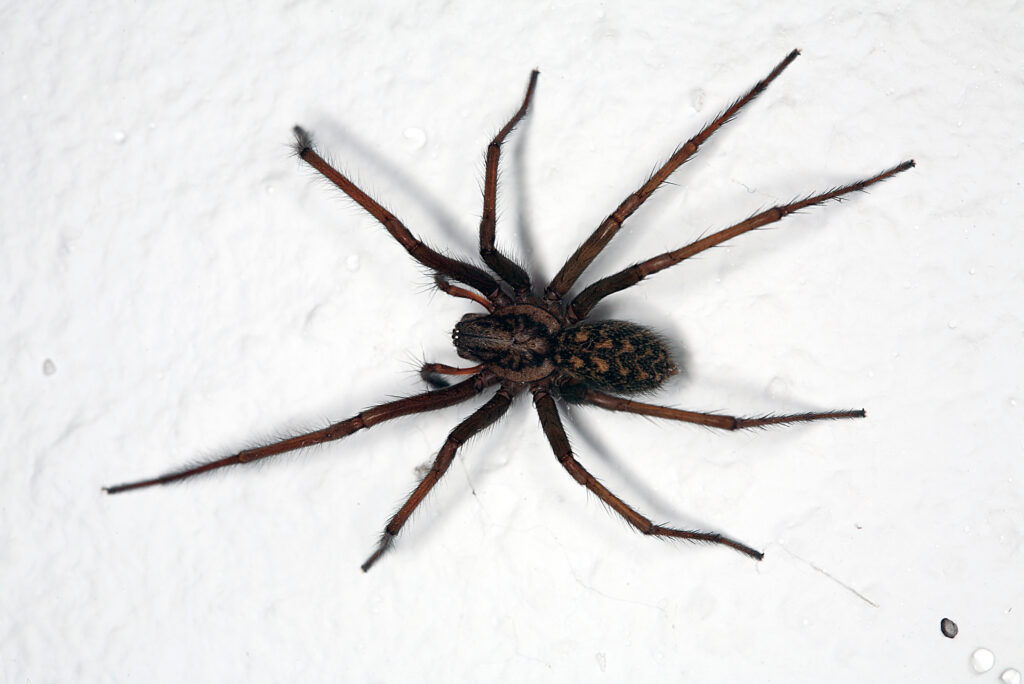
Outdoor lights can increase the pressure even more. Flying insects collect around porch lights and garage fixtures after dark, giving spiders a predictable place to feed.
The Problem Often Begins Where Homeowners Aren’t Looking
Most people notice the spider inside.
The actual buildup may be happening several feet away on the other side of the wall.
Common house spiders can settle underneath patio covers, around exterior window trim, behind downspouts, between fence posts, beneath outdoor cabinets, around utility boxes, behind stored items, underneath patio furniture, and along corners where stucco meets a block wall.
Garage areas are another common trouble spot.
Look around the upper corners behind the garage door tracks, underneath shelving, around the water heater, behind refrigerators or freezers stored in the garage, between stacked boxes, underneath workbenches, and around the edges of the garage door where insects can enter.
Inside the home, spiders may choose closets, laundry areas, ceiling corners, window frames, behind large furniture, underneath cabinets, storage rooms, and quiet areas near doorways.
Common house spider problems in Rialto homes frequently begin outside before repeated activity becomes noticeable indoors.
Spiders remain active where insects continue providing a dependable food source.
Repeated indoor spider sightings often point to exterior activity or entry points that have not been addressed.
One Web Can Turn Into a Pattern
Spider problems don’t always look serious in the beginning.
Maybe there’s a web over the garage side door.
You knock it down.
A week later there’s another one near the trash bins.
Then you notice webbing underneath the patio table.
After that, a spider appears in the laundry room.
The individual sightings don’t feel connected until they start happening close together.
You start seeing spiders in multiple areas the garage, patio, side yard, and finally indoors.
That’s when you realize it isn’t just one spider passing through.
The home has become part of a larger feeding and shelter pattern.
If spiders continue finding insects, undisturbed corners, and protected pathways around the structure, new activity can replace whatever you remove.
A Rialto Homeowner Scenario We See All the Time
Picture a typical Rialto property with a block wall running down one side of the house.
That side yard doesn’t get much afternoon sun. There’s an air-conditioning unit, a hose reel, a few storage containers, and shrubs planted along the wall. Irrigation keeps the soil damp underneath the plants.
The homeowner notices a couple of webs around the AC area and sprays them.
For a while, everything looks better.
But insects are still gathering around the landscaping. Spiders are still building behind the storage bins. One web is tucked underneath the hose reel where nobody sees it.
Then spiders begin appearing around the garage door and the nearby interior hallway.
The homeowner thought the first spray fixed the problem.
What it actually did was remove the spiders that were easiest to see.
The conditions supporting them never changed.
How Spiders Make Their Way From the Yard Into the House
Spiders don’t need a wide-open door.
Small structural gaps can provide enough access.
They can move around worn weather stripping, door thresholds, garage-door edges, gaps around window frames, vents, plumbing penetrations, utility lines, cable openings, and areas where exterior materials don’t seal tightly.
Garages are particularly important because they function as a transition zone between outside and inside.
A spider may first establish itself along the exterior garage trim. Insects move through the door gap. The spider follows the food activity inward. From there, storage, shelving, and wall gaps provide additional protection.
That’s why an indoor spider problem can keep returning even after several spiders have been removed.
Why DIY Spider Spray Often Feels Like It Worked Until It Doesn’t
There’s nothing wrong with vacuuming up a spider or knocking down a web.
The issue is expecting that to solve the whole problem.
Aerosol spray may kill the spider you hit directly. Sticky traps can catch spiders moving through certain areas. A broom can remove visible webbing.
But none of those automatically reduce the insects outside.
They don’t necessarily reach egg sacs hidden underneath exterior structures.
They don’t correct the gap beneath the garage door.
And they don’t prevent another spider from moving into the same productive location next week.
This is why some Rialto homeowners get caught in a cycle of spraying, cleaning, seeing improvement, and then dealing with spiders again.
For lasting bug control in Rialto, the treatment needs to address why spiders continue choosing the property in the first place.
What Long-Term Spider Control Should Actually Target
Good spider control is less about chasing individual spiders and more about changing the environment around the structure.
Exterior web removal is an important first step. It eliminates active webbing and helps remove egg sacs that might otherwise stay tucked beneath eaves and patio areas.
Next, the places where spiders establish themselves need attention.
That can include the foundation perimeter, eaves, patio covers, door and window areas, garages, utility zones, block-wall transitions, and other protected locations.
Insect pressure should also be reduced.
This part matters because spiders aren’t gathering around a home because they like the paint color. They’re there because they can feed.
Reduce the available insects and you remove one of the main reasons spiders remain around the structure.
Interior treatment can then be focused on actual activity instead of becoming the only line of defense.
For anyone searching for how to get rid of common house spiders in the Inland Empire, exterior prevention and insect control usually provide a much stronger long-term approach than repeatedly spraying spiders indoors.
Don’t Wait Until Every Room Has Its Own Spider Story
One occasional spider isn’t necessarily cause for alarm.
Repeated activity is different.
Fresh webs shortly after cleaning, spiders appearing in separate areas of the property, webbing building up around multiple entry points, or increased activity in the garage are signs worth paying attention to.
Once spiders have several productive areas around the property, getting ahead of the activity can require more work than addressing it early.
Seeing New Webs Every Week? Now Is the Time to Get Ahead of It
If spiders are showing up around different parts of your Rialto property, simply knocking down webs may no longer be enough.
If you’re seeing more than one fresh web or spider in separate areas, there’s likely more activity you aren’t seeing.
TruPest Solutions provides homeowners with fast service, local expertise, and affordable pricing for common house spiders and other pest problems throughout Rialto and the surrounding Inland Empire.
We focus on the areas where the problem develops, not just the spider sitting in plain sight.
👉 Many homeowners begin noticing a difference after the very first service.
For professional pest control in Rialto, CA, call TruPest Solutions at 951-334-5288.
Catching the problem while it is still concentrated around a few exterior areas is much easier than waiting until spiders become a regular sight inside.
Reading the Clues Spiders Leave Behind
James, owner of TruPest Solutions, brings 18 years of pest control experience to homes throughout Rialto and the Inland Empire.
Spider control becomes much more effective when you understand what their placement is telling you.
A web underneath an eave may point toward flying insects gathering around exterior lighting. Activity behind garage shelving can indicate insects entering through door gaps. Webs concentrated around landscaping can signal a consistent food source coming from irrigated soil and vegetation.
Those patterns matter.
An experienced technician pays attention to web location, surrounding insect activity, shade, moisture, structural openings, landscaping, and how different parts of the property connect.
That real-world understanding of Inland Empire pest behavior helps identify why spiders are present and where treatment will have the greatest impact.
Rialto’s Home Layouts Create Their Own Spider Hot Spots
Rialto has a wide mix of established neighborhoods, older homes, remodeled properties, and newer residential developments, but many share structural features that spiders can use.
Block walls are common.
So are narrow side yards between the house and property line. Many homes have attached garages, covered patios, mature trees, sprinkler-fed landscaping, exterior storage areas, and utility equipment positioned along shaded sides of the house.
Those spaces can become natural spider corridors.
In neighborhoods around North Rialto, properties with larger yards and mature landscaping may produce significant insect activity around the exterior. In more established central and southern Rialto neighborhoods, older garage doors, utility penetrations, patio structures, and landscaping near the foundation can create additional entry opportunities.
Rialto’s extended warm season also means insects can remain active for long stretches, particularly around irrigated yards.
That gives spiders more feeding opportunities and more time to establish webs.
The conditions in nearby Fontana and San Bernardino can be similar, but every property has a different combination of landscaping, shade, construction, and insect pressure.
That’s why effective spider exterminator service in Rialto begins with understanding the specific house not treating every property exactly the same way.
Rialto Spider Questions Homeowners Usually Ask After the Second or Third Sighting
Why do spiders disappear after treatment and then seem to return weeks later?
New spiders can move into areas where insects and shelter are still available. If exterior food sources, web-building sites, or entry points remain favorable, activity can gradually rebuild.
How do I know whether I’m dealing with common house spiders instead of a more concerning species?
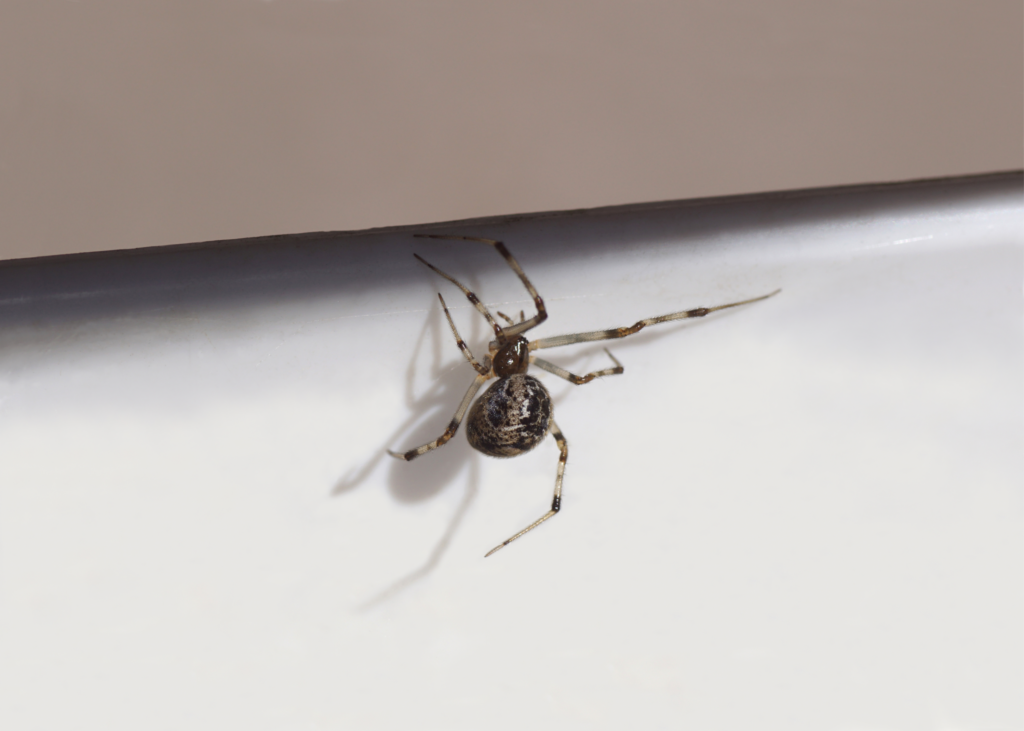
Common house spiders generally create irregular, tangled webs in sheltered locations and are often small and brownish or gray. Because several spider species can look similar at a glance, homeowners should avoid relying only on color for identification when there is uncertainty.
Why do I suddenly find spiders indoors when most of the webs are outside?
Outdoor spiders often establish themselves close to windows, doors, garage openings, and other structural transitions. Small gaps can allow activity to shift indoors, particularly when insect prey is also moving through those locations.
Are several small spiders worse than finding one larger spider?
Size alone doesn’t tell you how established the problem is. Multiple spiders or fresh webs appearing in different areas can be more useful indicators because they suggest several locations around the property are supporting activity.
What should I watch for after cleaning spider webs off my house?
Pay attention to how quickly the webs return and where they reappear. Fresh webbing in the same locations within a short period can indicate those areas still offer spiders good shelter and access to insects.
Don’t Make Spider Removal a Weekly Chore
There comes a point when wiping down webs stops being pest control and starts becoming routine maintenance for a problem that never really went away.
If you’re walking around your Rialto property every weekend removing new webbing from the patio, garage, windows, and eaves, the spiders are telling you something about the conditions around your home.
The food is still there.
The hiding places are still there.
And the routes toward the house may still be open.
The most effective way to control common house spiders in Rialto is to reduce exterior spider activity, remove established webbing, and control the insects attracting them before the problem keeps moving inward.
You don’t have to wait until spiders are appearing throughout the house to take action.
Call TruPest Solutions at 951-334-5288 for professional, affordable pest control in Rialto, CA, and get the property treated before a few recurring webs become a much bigger spider problem.