
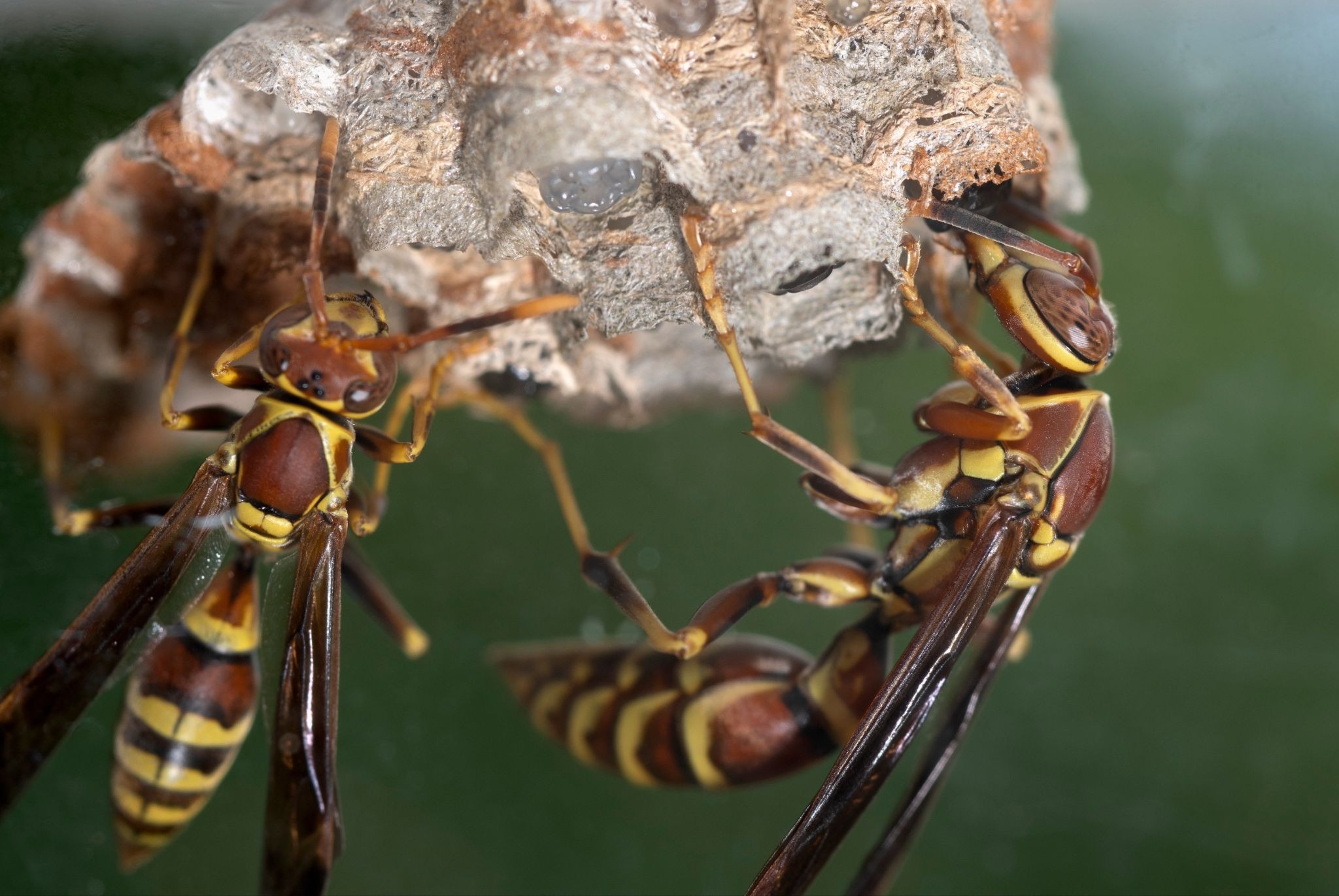
Wasps are often drawn to Rialto patios because backyard shade, irrigation moisture, outdoor meals, flowering plants, and protected rooflines give them convenient places to feed, drink, and build nests. The problem commonly begins under patio covers, inside block wall gaps, beneath roof tiles, or around sheds and exterior fixtures. Lasting control requires finding the nesting source, treating it correctly, and reducing the conditions that continue attracting wasps.
Understanding the Wasps Around Your Backyard
Wasps are flying insects that build nests and search surrounding properties for water, food, prey, and protected shelter. Around Rialto homes, paper wasps and yellowjackets are among the insects homeowners may notice near patios, eaves, trash areas, pools, and outdoor kitchens.
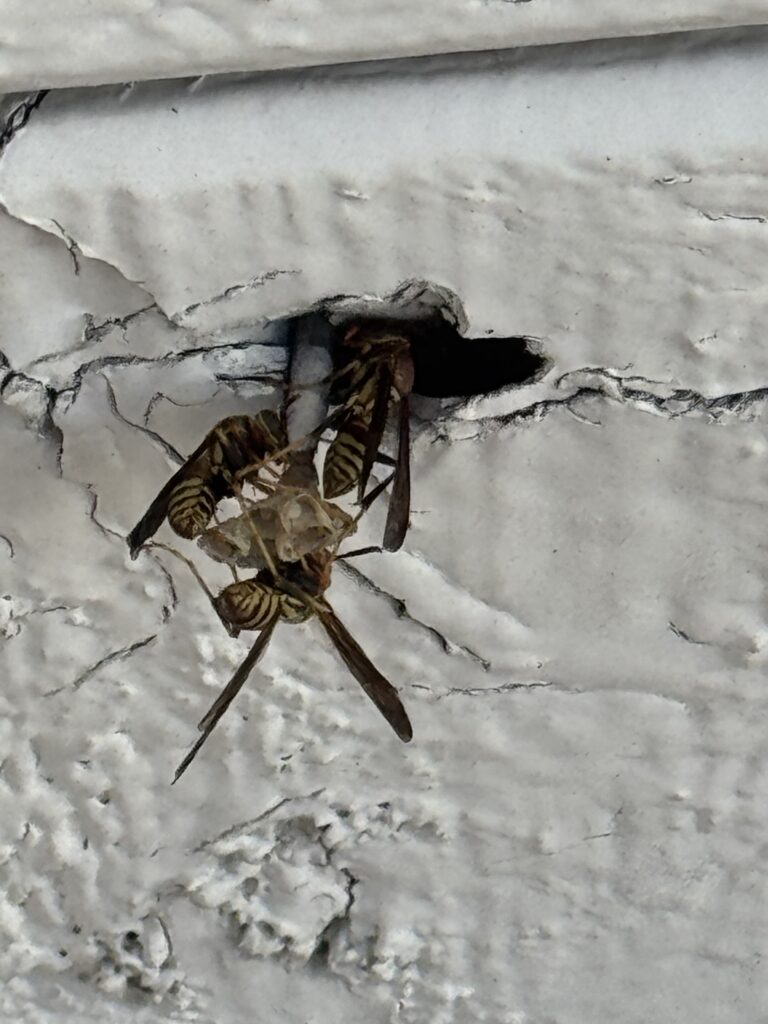
Wasp problems around Rialto patios usually begin outdoors near a protected nesting or feeding area.
Wasps repeatedly flying toward one roof gap or wall opening may be returning to a concealed nest.
A small amount of wasp activity can grow as the colony produces more workers throughout the warm season.
Your Patio May Be Offering More Than Shade
A quiet patio can become busy with wasps even when the yard looks clean. Rialto’s long stretches of warm, dry weather increase the insects’ need for dependable water and shelter. A dripping faucet, wet planter tray, swimming pool, dog bowl, or overwatered lawn can be enough to keep them returning.
Food is another major attraction. Wasps can quickly locate meat scraps from a barbecue, sweet drinks, fruit, open trash, recycling residue, and pet food. Once workers identify a dependable source, they may follow the same route back to it repeatedly.
Wasps gather around Rialto patios because warm temperatures, irrigation, shaded structures, and outdoor food provide reliable resources, which leads to increasing activity near seating areas and doors.
The issue may begin with one wasp checking the patio table. Later, another circles the trash containers. By the end of the week, several are moving between the roofline and the same corner of the yard.
At that point, the patio is no longer just a place they are visiting. It may be sitting directly within their daily travel path.
Where the Activity Is Really Coming From
Many homeowners look for a large paper nest hanging in plain sight. When they do not see one, they assume the wasps must be coming from somewhere else.
However, nests and resting areas can be surprisingly well hidden.
Around Rialto properties, wasps may be found:
- Beneath patio roof panels and wooden beams
- Inside hollow metal patio supports
- Behind outdoor lights and security cameras
- Under roof tiles or damaged fascia
- Around attic, gable, and dryer vents
- Inside cracks in block walls
- Beneath outdoor furniture and barbecue covers
- Behind storage cabinets or pool equipment
- Inside sheds and detached garages
- Within thick shrubs or climbing vines
- In abandoned holes in the soil
- Around irrigation boxes and utility covers
The visible wasps may be several yards away from the actual nest. A professional inspection focuses on their movement: where they arrive, where they disappear, and whether multiple insects are using the same route.
When a Normal Backyard Lunch Gets Interrupted
Picture a Rialto homeowner preparing lunch on the patio. A wasp appears near the food, so it is brushed away. Minutes later, another one arrives.
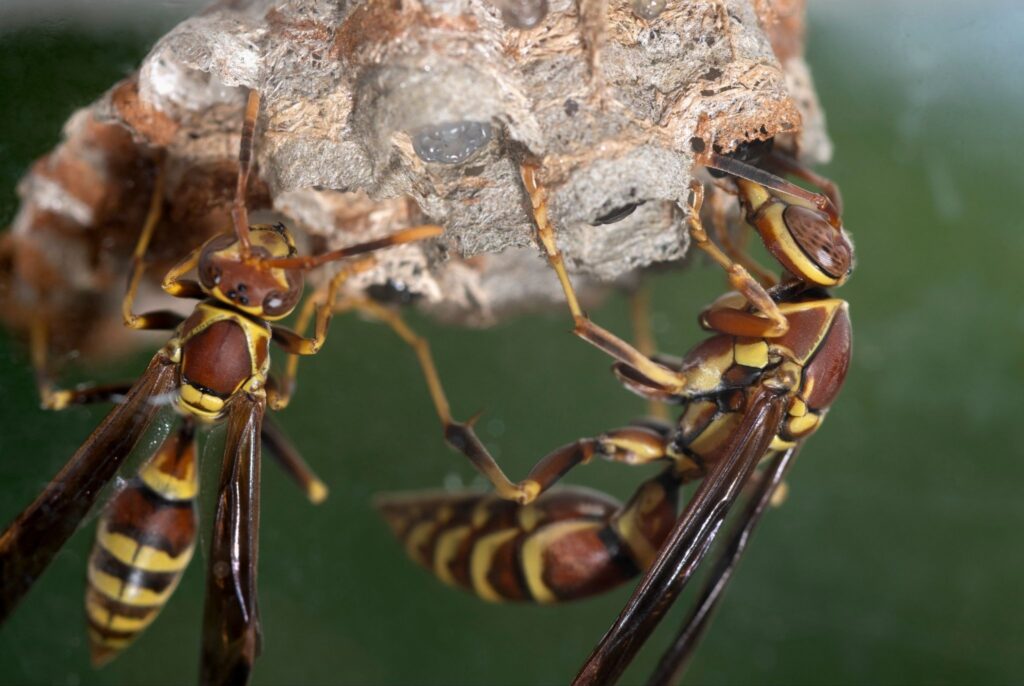
The next day, the same thing happens even though no food is outside.
A closer look shows wasps landing near a narrow opening between the patio cover and the stucco wall. They enter the gap, disappear, and then fly out again.
The homeowner sprays the opening in the evening and assumes the problem has been handled. For a day, the activity slows down. Then it returns near the side yard and sliding glass door.
You start seeing them in multiple areas, including places where there is no food or water nearby.
That is when you realize it is not just one wasp searching for a meal. The property may have an established nest that continues sending workers throughout the yard.
How Exterior Wasp Activity Can Reach the Interior
Most wasp problems begin outside, but patios are often connected to the house through doors, rooflines, vents, and structural gaps.
A wasp may accidentally fly through an open sliding door while people are carrying food outside. Others may enter through a damaged screen or a gap around an exterior fixture. This becomes more concerning when wasps repeatedly appear in the same indoor room.
Recurring indoor sightings near a ceiling, window, recessed light, fireplace, or upper wall may indicate activity inside an attic or structural void. A nest located behind the exterior surface may allow wasps to move deeper into the building.
Homeowners should avoid immediately sealing a suspected entry point while the nest is active. Blocking the normal exit may cause the wasps to search for another route, which can send them toward the interior.
A qualified exterminator in Rialto should locate and treat the active source before exclusion work is completed.
Why Quick DIY Fixes Often Miss the Colony
Spraying the wasps flying around the table may offer temporary relief, but it does little to affect the workers still inside the nest. More wasps can emerge and continue using the same area.
Hanging traps can catch some species, but they may not control paper wasps nesting beneath a patio cover or wasps entering a protected structural gap. Traps may also attract additional insects toward the area when they are placed too close to the seating space.
Knocking down a nest without confirming that it is inactive can create another hazard. Wasps may defend the nest, scatter into nearby areas, or rebuild somewhere else on the property.
DIY methods commonly fail because they focus on the insects homeowners can see. Professional wasp control focuses on where those insects are coming from and why the location was selected.
What Creates Reliable, Long-Term Control
Effective treatment begins with identifying the wasp species and following its flight pattern. Paper wasps, yellowjackets, and solitary wasps do not always behave the same way, so the treatment should match the activity.
A thorough service may involve:
- Inspecting patio covers, eaves, block walls, sheds, and rooflines
- Locating exposed or concealed nesting areas
- Treating the active nest with the proper application
- Removing accessible nest material when appropriate
- Checking nearby food and water sources
- Identifying structural gaps that may need to be repaired
- Recommending changes that reduce future attraction
After the colony is inactive, homeowners can improve prevention by keeping trash containers clean, repairing dripping faucets, removing fallen fruit, storing pet food indoors, and checking protected patio areas for new nest construction.
The objective is not to keep spraying every wasp that enters the yard. The objective is to stop the colony supporting the activity and reduce the chance of another nest becoming established in the same location.
Do Not Let the Nest Grow Beside Your Door
Wasp activity becomes more difficult to ignore as the colony grows. A nest near a patio, side gate, doorway, pool, or barbecue area can place family members, visitors, pets, and service workers directly in the wasps’ flight path.

If you are seeing more than one wasp repeatedly using the same part of your patio, there are likely additional wasps or a nesting area you cannot see.
Call TruPest Solutions at 951-334-5288 for fast service, affordable pricing, and pest control based on real local experience.
We inspect the full exterior, follow the activity back toward the source, and treat the areas responsible for the problem, not just the individual wasps flying around the yard.
Rialto homeowners often begin noticing a clear difference after their first service.
The longer the nest remains active, the more workers it can produce. Call TruPest Solutions before wasp activity takes over another weekend.
Reading the Flight Pattern Before Choosing the Treatment
James, owner of TruPest Solutions, has more than 18 years of pest control experience. During that time, he has handled wasp problems around patio covers, block walls, rooflines, sheds, attics, and outdoor living spaces throughout the Inland Empire.
Experienced wasp control involves more than finding a visible nest. James looks at where the insects are flying, whether they are carrying nesting material, how often they return, and which parts of the property they avoid or defend.
For example, wasps gathering around a trash area may simply be feeding. Wasps repeatedly entering the same hole beneath a roof tile are showing a nesting pattern. Those two situations require different solutions.
This behavior-based approach helps TruPest Solutions identify whether homeowners are dealing with occasional outdoor activity or a developing colony close to the house.
Why Rialto Properties Create Ideal Wasp Shelter
Rialto neighborhoods include a mix of established homes, newer developments, large corner lots, narrow side yards, detached garages, covered patios, block walls, and mature landscaping. Each property layout can create different opportunities for wasps.
In neighborhoods near Las Colinas, Renaissance, El Rancho Verde, and central Rialto, tile roofing and stucco construction may leave small protected gaps around eaves and exterior fixtures. Older homes may have weathered fascia, sheds, wood patio covers, or openings that have expanded over time.
Block walls are another common factor. Small cracks and hollow sections can provide undisturbed shelter. Side yards may also hold trash containers, stored equipment, irrigation valves, and hose connections several sources of food, moisture, and nesting protection in one compact area.
Rialto’s summer heat intensifies the problem. When natural moisture becomes harder to find, regularly watered lawns, pools, fountains, and pet bowls become more attractive.
These local conditions are why a wasp problem in Rialto may behave differently from one in Fontana or San Bernardino. Effective pest control in Rialto, CA, should account for the home’s construction, sun exposure, landscaping, and daily outdoor activity.
Questions Rialto Homeowners Ask When Wasps Keep Returning
Why are wasps active on my patio even when there is no food outside?
Wasps may be collecting water, hunting other insects, gathering wood fibers, or traveling to a nest. Repeated activity without exposed food often means the patio is near a nesting site or part of an established flight path.
How can I tell whether wasps are nesting or only passing through?
Watch for repeated entry into the same crack, beam, roof gap, or wall opening. Nesting wasps tend to use a consistent route. Random foragers usually move around the property without repeatedly disappearing into one specific location.
Should I remove a small nest by myself?
A small exposed nest may still contain defensive wasps. Attempting to remove it without the proper protection, timing, or treatment can lead to multiple stings. Professional help is especially important when the nest is overhead, concealed, or close to a frequently used area.
What does it mean when wasps suddenly become more aggressive?
Defensive behavior can indicate that people or pets are getting too close to the nest. Increased aggression may also happen as the colony grows and more workers guard the area. The location should be inspected promptly.
Why do wasps rebuild on the same patio every year?
The structure may offer dependable shade, protection from wind, and easy access to water or food. Removing the old nest does not change those conditions. Treatment, exclusion, and correcting attractants can help reduce repeat nesting.
Reclaim the Patio Before the Next Gathering
A few wasps may not seem urgent at first, but consistent activity near a patio rarely improves on its own when an active nest is nearby.
As the number of workers increases, the wasps may spread into the side yard, gather near doors, or become defensive around the nesting site. That can turn a comfortable backyard into an area the family begins avoiding.
The most effective way to control wasps around Rialto patios is to locate and treat the exterior source before the colony grows or reaches the home’s interior.
Call TruPest Solutions at 951-334-5288 for fast, affordable wasp control from a local company that understands Rialto properties and Inland Empire pest behavior.
Take care of the source now and enjoy your patio without constantly watching what is flying overhead.