
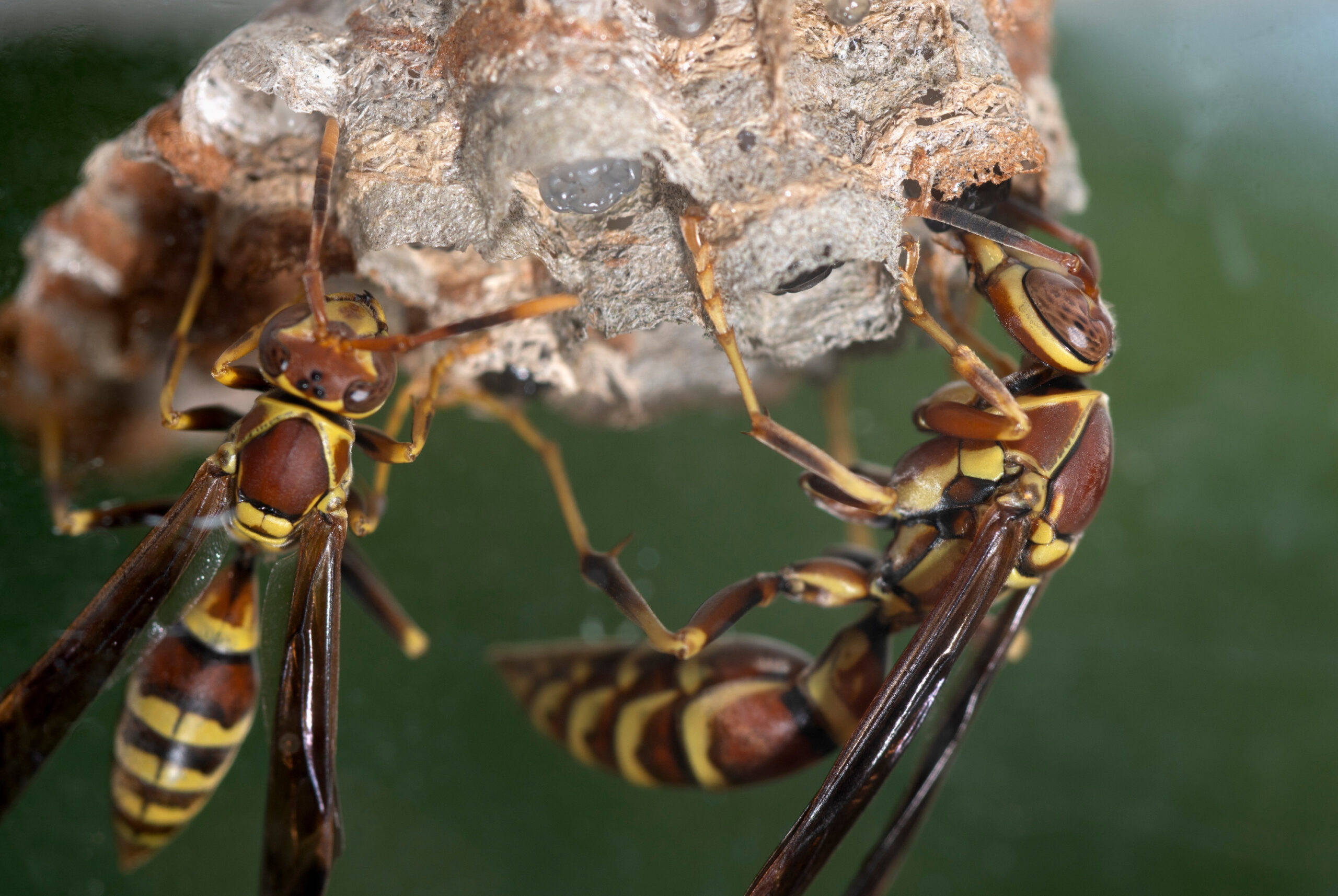
Paper wasps become highly active around San Bernardino homes during summer because intense heat, irrigated yards, swimming pools, shaded rooflines, and sheltered exterior structures give them dependable water and nesting locations. Most colonies begin outside beneath eaves, patio covers, roof tiles, block-wall caps, sheds, and utility fixtures. The most reliable way to get rid of paper wasps is to locate the active colony, treat the nest correctly, remove it when safe, and inspect nearby areas for hidden or developing nests.
What Exactly Are Paper Wasps?
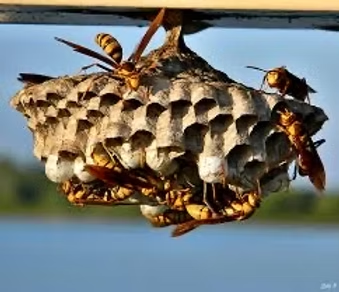
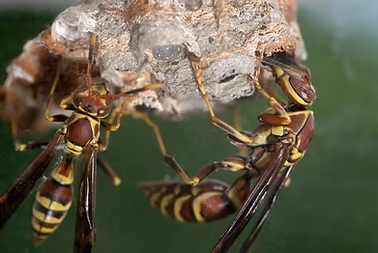
Paper wasps are narrow-bodied wasps with long legs that create open, umbrella-shaped nests from chewed wood fibers. Their nests contain visible honeycomb-like cells and are commonly attached beneath protected exterior surfaces.
They are usually brown, reddish-brown, black, or yellow-marked. When flying, their legs often hang noticeably below their bodies.
Paper wasps can help reduce certain garden insects, but that benefit disappears when a colony develops beside a doorway, patio, garage, play area, pool, or walkway. Once the nest is close to daily household activity, accidental contact becomes much more likely.
The Summer Warning Most Homeowners Miss
The first sign is rarely a large nest.
It may be one wasp hovering beneath the roofline in the morning. Later that afternoon, another lands near the hose bib or drinks from a damp planter. Because the activity seems scattered, it is easy to assume the insects are simply passing through.
But paper wasps are purposeful.
A queen may already be building a small nest beneath a second-story eave, behind an exterior light, under a patio beam, or inside a protected wall opening. As the first workers mature, they begin gathering food, collecting water, expanding the comb, and defending the nesting site.
The activity that looked minor in early summer can become persistent within weeks.
By the time several wasps are crossing the yard throughout the day, the colony may already be established.
Why San Bernardino Creates Ideal Conditions for Paper Wasps
San Bernardino’s summer weather places constant pressure on insects to find water and shade. Paper wasps respond by gathering around properties with irrigation, pools, fountains, pet bowls, dripping outdoor faucets, air-conditioning condensation, and damp landscaping.
Homes throughout the city also offer countless protected nesting surfaces. Tile roofs, stucco eaves, detached garages, covered porches, wooden patio structures, block walls, sheds, carports, and utility boxes can shelter a nest from wind and direct afternoon sunlight.
Paper wasps show up around San Bernardino homes because extreme summer heat drives them toward dependable moisture and shaded structures, which leads to increased nesting activity near patios, rooflines, doors, and yards.
This is one reason paper wasp problems can appear suddenly during hot Inland Empire weather. The insects may have been present for weeks, but colony growth makes their flight patterns much harder to overlook.
Paper wasp problems in San Bernardino homes usually begin outside before activity becomes noticeable near doors, garages, and interior windows.
Paper wasp colonies expand as worker wasps emerge, enlarge the nest, and defend a growing number of developing young.
Repeated wasp traffic to one roof corner, beam, fixture, or wall opening often signals a nearby nest.
The Exact Places Paper Wasps Use for Nesting
Paper wasps look for surfaces that remain protected from sprinklers, heavy wind, and prolonged direct sun. Their nests may be exposed underneath a structure, but they are often positioned where they cannot be seen from ground level.
Common nesting locations around San Bernardino properties include:
Beneath roof eaves and fascia edges
Under curved roof tiles
Behind exterior light fixtures
Beneath wood patio beams
Inside sheds and detached garages
Under outdoor tables and chairs
Behind shutters and decorative trim
Beneath block-wall caps
Inside open electrical or utility boxes
Under barbecue counters
Behind stored ladders, bins, and gardening equipment
Beneath play structures and swing sets
Around pool equipment enclosures
Inside carports and covered entryways
Side yards deserve special attention. These narrow spaces often contain water heaters, trash containers, air-conditioning equipment, storage racks, tools, and irrigation lines. Because they receive limited foot traffic, a nest can grow there without anyone noticing.
A wasp that repeatedly flies behind the same beam, roof tile, or fixture is providing an important clue. Random insects do not normally return to one precise location every few minutes.
How a Small Nest Turns Into a Property-Wide Problem
A paper wasp nest does not need to be large before it affects how a homeowner uses the property.
Workers leave the colony throughout the day to find insects, moisture, wood fibers, and plant material. As their numbers increase, wasps may appear near several areas even though the colony itself is in only one location.
At first, you notice one near the garden.
Then another begins circling the pool.
A few days later, wasps are crossing the patio, landing along the block wall, and flying above the driveway.
You start seeing them in multiple areas, especially during the hottest part of the afternoon.
That is when you realize it is not just one wasp wandering through the neighborhood. An active colony is likely using your property as a regular feeding and water source.
The danger increases when the nest is near movement or vibration. Opening a gate, moving a storage container, trimming a shrub, using a leaf blower, or bumping a patio structure can trigger defensive behavior.
One Ordinary Yard-Cleanup Day Can Expose the Entire Colony
Consider a homeowner in San Bernardino preparing the backyard for a family gathering.
While moving chairs beneath the patio cover, they notice a wasp circling one corner. They spray the visible insect and continue cleaning. Nothing else happens, so the issue seems resolved.
The next morning, two wasps return to the same beam.
Later in the week, someone moves a tall storage cabinet positioned against the patio post. Several wasps suddenly emerge from the narrow space behind it.
The nest was never visible from the yard. It had been developing in a shaded area between the structure and the cabinet, only a few feet from where people regularly sat.
This is how many paper wasp problems escalate. The homeowner sees the insects but cannot see the source. The colony continues growing until an ordinary activity brings someone too close.
How Outdoor Wasp Activity Reaches the Interior
Paper wasps generally prefer to nest outdoors, but exterior colonies can still result in insects entering the home.
A nest above a frequently used doorway may allow wasps to fly inside when the door opens. Colonies near attic vents, roof gaps, damaged screens, garage doors, utility penetrations, or recessed exterior fixtures may also produce indoor sightings.
Some wasps become trapped indoors after following light or airflow. They may appear near upstairs windows, sliding doors, skylights, laundry rooms, garages, or ceilings beneath attic spaces.
One indoor wasp does not automatically confirm an indoor nest. However, recurring sightings in the same room or along the same side of the house may indicate an exterior colony close to an entry point.
Paper wasps can also enter wall voids or attic areas through openings around rooflines. Sealing an opening while wasps are actively using it may force them toward another route, including the interior.
That is why identifying the colony location should come before attempting structural repairs.
Why Spraying the Flying Wasps Does Not Solve the Source
Most do-it-yourself efforts target the insects that are visible rather than the colony producing them.
Aerosol spray may kill a few exposed workers, but many others could be away from the nest collecting food or water. If the queen, developing larvae, or protected workers survive, the colony may continue.
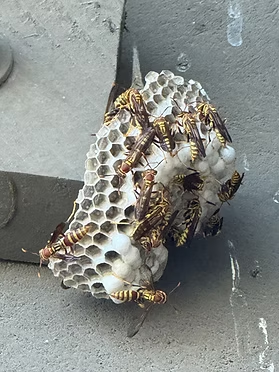
Distance is another problem. A homeowner spraying from the ground may not reach a nest hidden above a patio beam, beneath a roof tile, or behind a fixture. The product lands nearby, but the active cells remain protected.
Knocking down the comb can also create a false sense of success. Surviving wasps may return, rebuild close by, or continue gathering around the same favorable structure.
Hosing the nest, hitting it with a broom, covering an active opening, or climbing a ladder with household spray can create unnecessary risk. Paper wasps react aggressively when movement or vibration threatens the colony.
DIY treatments are even less effective when the property has more than one nest. The visible colony near the patio may not be the only source of activity.
Professional bug control in San Bernardino focuses on locating the origin of the problem rather than chasing individual wasps around the yard.
What Long-Term Paper Wasp Control Requires
Successful control begins by reading the insects’ movement.
A trained technician watches where wasps are coming from, where they are going, how often they return, and which structures they repeatedly approach. These flight patterns can reveal a nest that is not visible from the ground.
The property should then be inspected for active nests, abandoned combs, protected nesting surfaces, and secondary colonies. Treatment must be matched to the location, colony size, and level of activity.
Once the colony is inactive, the nest can be removed when accessible. Nearby rooflines, patio structures, sheds, wall caps, and utility areas should also be checked so another nest is not overlooked.
Long-term prevention may involve reducing standing water, repairing damaged screens, correcting small structural openings, and monitoring high-risk nesting locations during warm weather.
San Bernardino’s extended heat means wasp activity can remain intense for much of the summer. A colony that is ignored in June or July may be considerably larger and more defensive by late summer.
For homeowners searching for an exterminator in San Bernardino or trying to learn how to get rid of paper wasps in the Inland Empire, early exterior treatment is usually safer and more effective than waiting for the nest to mature.
Stop the Colony Before Someone Accidentally Disturbs It
Paper wasps do not need to chase people around the yard to create a serious risk. A hidden nest near a gate, patio, doorway, pool, or storage area can be disturbed without warning.
If you are seeing more than one wasp repeatedly returning to the same structure, there is likely a nest or additional activity you cannot see.
TruPest Solutions provides fast service, local expertise, and affordable pricing for paper wasp problems in San Bernardino homes. We inspect the rooflines, exterior structures, water sources, and concealed areas where these colonies commonly develop.
Homeowners often notice a meaningful difference after the first service.
Do not wait until wasps begin defending the area or someone gets stung. Call TruPest Solutions at 951-334-5288 to schedule professional paper wasp control.
James Knows the Difference Between Passing Wasps and an Active Colony
James, owner of TruPest Solutions, brings 18 years of pest control experience to every inspection. His familiarity with Inland Empire pest behavior helps him recognize the patterns that point toward a developing paper wasp colony.
The number of wasps is only one part of the inspection. Their direction of travel, flight height, preferred water sources, landing surfaces, and return frequency can reveal where the nest is hidden.
A wasp scraping a fence may be collecting wood fibers for nest construction. Several wasps repeatedly disappearing behind the same fascia board may indicate something much more urgent.
James also understands how San Bernardino’s heat changes wasp behavior. During extreme temperatures, colonies may become more dependent on pools, irrigation, shaded walls, and condensation lines. That can increase wasp traffic close to areas where families and pets spend time.
This practical understanding allows TruPest Solutions to address the colony itself instead of applying a generic treatment and hoping the activity disappears.
San Bernardino Homes Offer More Nesting Opportunities Than Many Owners Realize
San Bernardino includes a wide range of home styles, property sizes, and exterior layouts. Older central neighborhoods may have detached garages, aging wood trim, mature trees, covered porches, and sheds. North San Bernardino and foothill-area properties often include tile roofs, large patios, swimming pools, block walls, and extensive landscaping.
Neighborhoods near Del Rosa, Arrowhead, Verdemont, and other parts of the city may experience slightly different wind, shade, and landscaping conditions, but the same nesting opportunities appear repeatedly.
Paper wasps use:
Shaded patio corners
Gaps beneath roof tiles
Block-wall caps
Detached structures
Narrow side yards
Pool equipment areas
Irrigated planters
Exterior utility fixtures
San Bernardino’s hot afternoons make shaded architecture especially attractive. At the same time, irrigation and household water sources give wasps the moisture they need to remain active.
Our local inspections account for these conditions. We do not treat a compact older home the same way we inspect a larger foothill property with multiple rooflines, outbuildings, and patio structures.
Questions San Bernardino Homeowners Ask When Wasps Keep Appearing
Why do I see paper wasps every afternoon but not in the morning?
Paper wasp activity often increases as temperatures rise and workers begin searching for water, insects, and nesting material. Afternoon activity near pools, irrigated plants, and shaded structures can indicate that a colony is established nearby.
Can paper wasps build more than one nest on the same property?
Yes. A property with several sheltered surfaces may support multiple developing nests. Treating one obvious colony does not rule out another beneath a different eave, patio cover, wall cap, or shed roof.
Why are paper wasps hovering around my block wall?
They may be resting on the warm surface, collecting moisture, gathering wood fibers, or traveling to a nest hidden beneath a wall cap. Repeated activity at one specific section should be inspected.
Is a small paper wasp nest safe to leave alone?
A small nest may contain only a few wasps today, but the colony can grow as new workers emerge. Location matters. Even a small nest near a doorway, play area, patio, or walkway can create a substantial sting risk.
What should I do when wasps disappear beneath my roof tiles?
Do not seal the opening or attempt to lift the tiles while the insects are active. Wasps entering the same gap repeatedly may indicate a concealed nest. The area should be professionally inspected before any repair or closure is attempted.
The Nest Will Not Stay Small All Summer
The easiest paper wasp colony to control is the one addressed before it becomes crowded with defensive workers.
What begins as occasional flight around the yard can turn into constant activity near the patio, pool, garage, or front entrance. Once the colony becomes established, everyday movements around the property can place someone too close to the nest.
The most effective way to control paper wasps in San Bernardino is early exterior treatment that finds the colony, removes the source, and reduces the chance of continued nesting.
Do not wait until the wasps become aggressive or begin entering the home.
Call TruPest Solutions at 951-334-5288 for fast, affordable, locally informed paper wasp control in San Bernardino.