
Fire ants show up around San Bernardino homes because hot Inland Empire weather, dry soil, irrigation leaks, lawns, planter beds, and shaded moisture pockets create the right conditions for colonies to build and spread. The problem usually starts outside in the yard, along block walls, near sprinkler lines, under concrete edges, or inside landscaping before homeowners notice trails, mounds, or aggressive ants near patios and walkways. The best way to get rid of fire ants is to treat the exterior source, locate active nesting areas, reduce the conditions attracting them, and use a treatment plan that targets the colony instead of only killing the ants you can see.
What Are Fire Ants?
Fire ants are aggressive, reddish-brown ants known for building outdoor colonies and delivering painful stings when their nest is disturbed. Unlike ordinary nuisance ants, fire ants defend their nesting areas quickly, which makes them a bigger concern around yards, pets, children, walkways, and outdoor living spaces.
Why San Bernardino Yards Create the Perfect Setup
San Bernardino has the kind of weather pests respond to quickly. Long stretches of heat dry out the ground, but most homes still have pockets of moisture from sprinklers, hose bibs, irrigation valves, pool areas, and shaded landscaping. That combination creates a strong survival zone for fire ants.
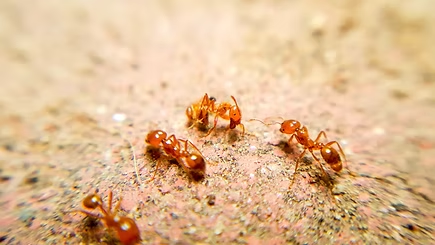
Fire ants show up in San Bernardino because hot weather pushes them toward moisture and protected soil, which leads to colonies forming near yards, foundations, patios, and landscaped areas.
This is why a homeowner may not notice anything one week, then suddenly see ants moving near the driveway, patio slab, or side gate the next. It feels sudden, but the colony has usually been developing quietly before the visible activity starts.
Fire ant problems in San Bernardino homes usually start outside and move inward.
Fire ant infestations grow through hidden nesting, colony expansion, and repeated foraging trails.
The longer fire ants stay active around a property, the more areas they can claim.
Where Fire Ants Hide Before Homeowners Notice Them
Fire ants do not always build obvious mounds right in the middle of the lawn. In San Bernardino homes, they often use the areas people overlook.
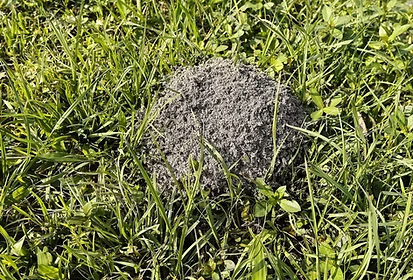
You may find them near irrigation boxes, sprinkler heads, cracks along concrete, the edge of the driveway, under pavers, near block walls, around tree wells, beneath decorative rock, next to AC condensation lines, around trash bins, and along the narrow side yard where moisture sits longer than the rest of the property.
They can also nest near patio furniture, under stored items, around dog runs, beneath outdoor mats, near pool equipment, and along the base of stucco walls where soil meets the foundation.
That is what makes fire ants frustrating. You may only see a few ants crossing the patio, but the real issue may be tucked behind a planter, under a concrete lip, or inside a damp section of soil you rarely inspect.
The Small Sign That Turns Into a Bigger Problem
A typical San Bernardino fire ant problem does not start with a dramatic swarm. It starts with something easy to brush off.
A homeowner walks outside in the evening and sees a few reddish ants moving near the back patio. A couple days later, they notice more activity near the hose. Then the ants show up by the side yard gate. After that, someone steps too close to a hidden nest and gets stung.
That is when you realize it is not just one random ant.
The escalation usually happens when you start seeing them in multiple areas: near the patio, along the walkway, around the lawn edge, and close to the foundation. At that point, the ants are not just passing through. They are using the property.
Fire ants are especially concerning because they are defensive. When a nest is disturbed by a shoe, lawn mower, pet, child, or garden tool, they can rush out quickly. That is why homeowners often call only after the yard starts feeling uncomfortable to use.
How Fire Ants Move From Outside Toward the Home
Most fire ant issues begin outdoors, but the pressure can move closer to the home when colonies expand or conditions change. In San Bernardino, this can happen during extreme heat, after irrigation changes, after rain, or when yard work disturbs the soil.
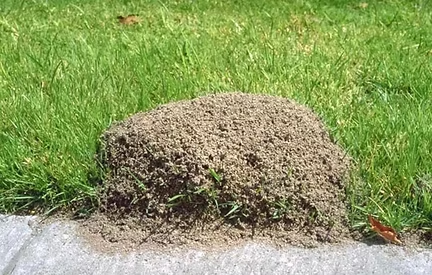
Fire ants may travel along foundation edges, under garage thresholds, around door frames, through weep holes, near utility penetrations, and along cracks where concrete meets the structure. They are usually looking for food, moisture, or shelter, and once they establish trails close to the home, indoor sightings become more likely.
Kitchens, bathrooms, laundry rooms, garages, and areas near sliding glass doors are common concern spots when outdoor fire ant activity gets close enough. Even if the main colony stays outside, ants moving near entry points can make the problem feel like it is entering the house.
This is why exterior control matters. If the outside source is ignored, the inside issue can keep returning.
Why DIY Fire Ant Treatments Often Fall Short
Most homeowners try something before calling an exterminator in San Bernardino. They spray the trail. They pour something on the mound. They buy a bag of granules. Sometimes it looks better for a few days.
Then the ants come back nearby.
That happens because fire ant colonies are not always eliminated by surface-level treatments. Spraying visible ants may kill the workers you see, but it may not reach the queen or the deeper colony structure. Disturbing a mound can also cause fire ants to relocate, which makes the problem appear in a new part of the yard.
DIY products can also miss the hidden nesting zones that matter most: irrigation boxes, block wall edges, under concrete, and moisture-heavy landscaping. If those areas are not inspected and treated correctly, the colony pressure remains.
For homeowners searching how to get rid of fire ants in the Inland Empire, the answer is not just “spray the ants.” The answer is finding where they are nesting, why they are surviving there, and stopping the activity before it spreads into more parts of the property.
What Actually Works Long-Term
Long-term fire ant control starts with a proper inspection. The goal is to identify where the ants are active, where they are nesting, where moisture is supporting them, and how close they are getting to the home.
A strong fire ant service may include targeted exterior treatments, treatment of active nesting zones, attention to trails and pressure points, and recommendations for reducing moisture or clutter that helps ants stay protected. In many cases, consistent exterior pest control in San Bernardino CA helps prevent fire ants and other pests from building up around the home in the first place.
The most effective approach is not just reacting after stings happen. It is stopping the colony while it is still outside, before it spreads into the yard, garage, patio, and foundation line.
For fire ant problems in San Bernardino homes, early exterior treatment gives homeowners the best chance to regain control before the infestation becomes harder to manage.
Stop Fire Ants Before the Yard Becomes Off-Limits
Fire ants can turn a normal backyard into a place you avoid. Once they are near walkways, patios, lawns, or play areas, waiting usually gives the colony more time to spread.
If you are seeing more than one mound, there is likely more activity you are not seeing.
TruPest Solutions offers fast service, local expertise, and affordable pricing for homeowners dealing with fire ants, ants, spiders, roaches, and other Inland Empire pest problems. Whether you need bug control in San Bernardino, an exterminator in San Bernardino, or reliable pest control San Bernardino CA, TruPest Solutions focuses on treating the source instead of just chasing the pests you can see.
Call TruPest Solutions today at 951-334-5288.
Many homeowners see a noticeable difference after the first service, especially when the fire ant activity is caught before it spreads across the property.
How James Recognizes Fire Ant Pressure Before It Gets Worse
James, owner of TruPest Solutions, brings 18 years of pest control experience to homes throughout the Inland Empire. That experience matters with fire ants because the visible activity is rarely the whole story.
A few ants near a patio can point to a larger nesting area near irrigation. A mound near the lawn edge can connect to moisture along a block wall. Activity near the driveway may be tied to cracks, soil movement, or nearby landscaping. These patterns are easy to miss when you are only focused on the ants walking across the surface.
James understands how Inland Empire pests respond to heat, dry soil, irrigation, shade, and home layout. Fire ants, like many local pests, follow survival conditions. They move toward moisture, protection, and food. Once those conditions are found, colonies can grow quickly.
That is why TruPest Solutions looks at the property as a whole. The goal is not just to knock down what is visible today. The goal is to understand why the ants are there, where they are likely nesting, and what needs to be done to reduce the chance of repeat activity.
Why Fire Ant Problems Hit San Bernardino Homes Differently
San Bernardino homes have a mix of older neighborhoods, newer developments, hillside areas, tight side yards, block walls, concrete patios, and irrigated landscaping. Those features can create perfect hiding places for fire ants.
In neighborhoods around North San Bernardino, Verdemont, Del Rosa, Muscoy, Arrowhead, and areas closer to Highland and Rialto, yards often have a combination of heat exposure and moisture pockets. That is a major reason ants can stay active even when the rest of the soil looks dry.
Block walls hold heat. Side yards trap debris. Sprinkler overspray keeps soil damp near foundations. Decorative rock can hide trails. Patio slabs and driveway cracks give ants cover. Once fire ants settle into those protected areas, they can be hard for homeowners to track without a full exterior inspection.
Nearby cities like Fontana, CA and Rialto see many of the same pest pressures because the Inland Empire climate creates similar conditions across the region. But San Bernardino properties often have their own challenges because of varied terrain, older structures, and yard layouts that give pests several places to hide.
That is why local pest control matters. Fire ants in San Bernardino are not just a general ant problem. They are a yard, moisture, soil, heat, and structure problem happening all at the same time.
Fire Ant Questions San Bernardino Homeowners Ask Once Activity Spreads
Why do fire ants keep coming back after I spray them?
Fire ants often come back because the spray only kills the ants moving on the surface. If the main colony, queen, or hidden nesting area is not treated, the activity can rebuild or shift to another part of the yard.
How can I tell if they are fire ants and not regular red ants?
Fire ants are usually reddish-brown and more aggressive around nesting areas. If ants rush out when the soil is disturbed or someone gets painful stings near a mound, patio edge, or lawn area, fire ants may be involved.
Are fire ants dangerous inside the house?
The biggest risk is usually outside near nests, but fire ants can become an indoor concern if trails reach entry points, garages, kitchens, bathrooms, or laundry areas. Indoor sightings often mean outdoor pressure is close to the structure.
What are signs the fire ant problem is getting worse?
Multiple mounds, ants appearing in different parts of the yard, activity near patios or walkways, stings, ants near the foundation, and trails around irrigation areas are all signs the problem may be spreading.
Can fire ants spread from my neighbor’s yard to mine?
Yes. Fire ants do not respect property lines. If nearby yards have moisture, untreated colonies, or connected landscaping, activity can spread along fences, block walls, lawns, and shared soil zones.
Take Back the Yard Before Fire Ants Settle In
Fire ants are one of those pests homeowners should not ignore once they start showing up. A few ants outside may not seem urgent at first, but once colonies get established, the yard can become uncomfortable, unsafe, and harder to treat.
The most effective way to control fire ants in San Bernardino is early exterior treatment that stops the source before the colony spreads.
If you are seeing fire ants near your lawn, patio, driveway, side yard, block wall, or foundation, now is the time to act. Call TruPest Solutions at 951-334-5288 and get local fire ant control from a team that understands San Bernardino homes, Inland Empire pest pressure, and how to stop the problem before it takes over more of your property.