
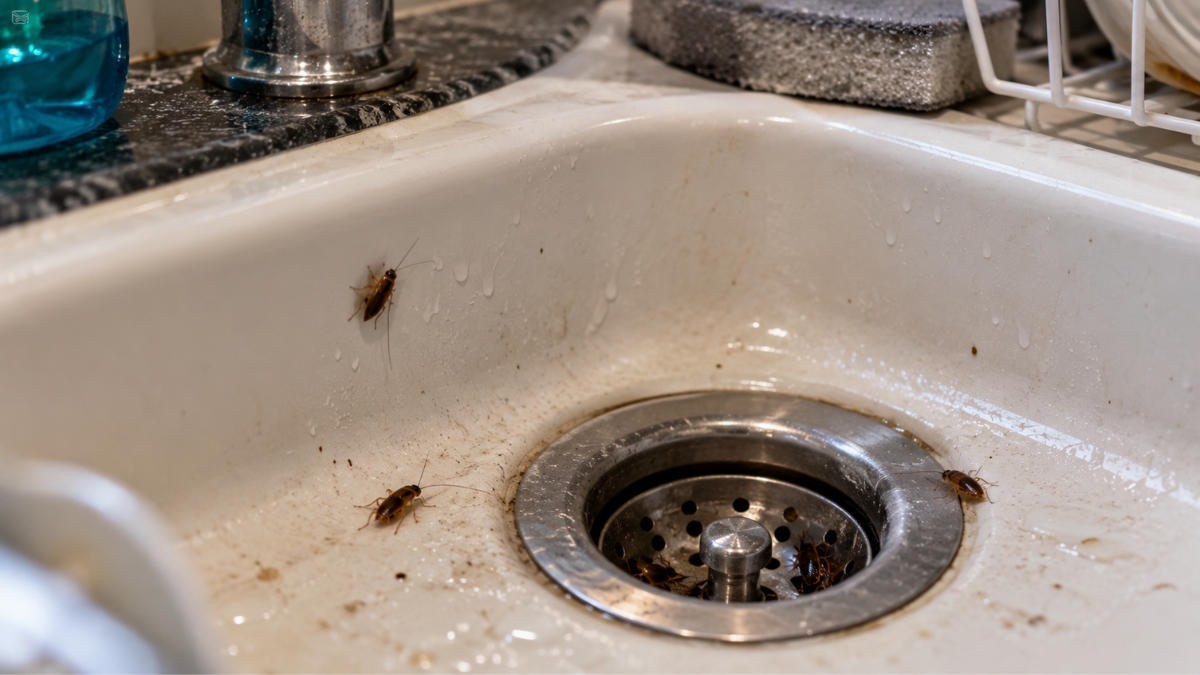
Yes, cockroaches can sometimes come through drains, but a roach found in a sink or bathtub may be using gaps around the plumbing rather than traveling directly through the drainpipe. Moisture, food residue, and sheltered spaces make kitchens and bathrooms common places for cockroach activity, so the spot where you see one does not always reveal where it came from. If roaches keep turning up around plumbing fixtures, Fontana cockroach control should focus on tracing the activity back to its source instead of treating the drain as the entire problem.
The Drain May Be the Route—or Just the Place You Notice Them
A cockroach sitting in a kitchen sink creates a convincing picture: it must have crawled up the drain. In some cases, that is possible. Certain cockroach species are associated with sewers, drainage systems, and other damp environments, and plumbing can provide a route into or between parts of a building when conditions allow.
Yet a sink is surrounded by other possible pathways that are much less obvious. Supply lines and drainpipes pass through cabinets, walls, and floors, often leaving small spaces around them. Cockroaches can move through these concealed areas and emerge near a fixture without ever traveling through the drain opening. The sink may simply be where the insect becomes visible after spending most of its time somewhere out of sight.
That distinction changes how the problem should be approached. Blocking or cleaning a drain will not accomplish much if cockroaches are actually moving through a wall void, hiding beneath the cabinet, or traveling from an appliance a few feet away. The surrounding area deserves as much attention as the plumbing itself.
Why the Cabinet Under the Sink Deserves a Closer Look
The cabinet beneath the sink can provide several conditions cockroaches favor in one compact area. It stays dark and relatively undisturbed, plumbing keeps moisture close by, and stored household items can create additional hiding places. If roaches repeatedly appear around the sink, checking this space may reveal clues that are never visible from above.
Use a flashlight and pay attention to:
- Moisture around plumbing connections: A slow drip, condensation on a pipe, or damp cabinet material can give cockroaches a dependable water source.
- Gaps where pipes enter the wall: Extra space around plumbing lines can provide a concealed route between the cabinet and wall voids.
- Droppings in corners or along edges: Small dark specks in protected areas can indicate that cockroaches are spending time there rather than merely passing through.
- Shed skins or egg cases: These signs can point to activity occurring out of sight, particularly when live roaches are rarely seen during the day.
- Clutter pressed against the back of the cabinet: Bags, boxes, cleaning products, and other stored items can create tight, undisturbed spaces where cockroaches can shelter.
- Activity near cabinet seams: Narrow joints, cracks, and corners give small cockroaches places to retreat when the cabinet is opened.
Finding one of these conditions does not necessarily prove the cabinet is the source, but several signs in the same small area can provide a much stronger lead. It can shift the investigation away from simply asking whether roaches are coming through the drain and toward figuring out where they are actually spending their time.
Small Roaches Around the Sink Tell a Different Story
The type of cockroach you find can completely change what a sink-area sighting means. Small, tan cockroaches appearing repeatedly in a Fontana kitchen may be German cockroaches, a species capable of establishing populations indoors where warmth, water, food, and narrow hiding places are available. Kitchens can provide all of those necessities within a surprisingly small area.
German cockroaches may hide around cabinet joints, refrigerators, dishwashers, and other appliances, then become more noticeable when they venture out for food or moisture. This can create the impression that the insects originate from the sink when they are actually traveling only a short distance from a nearby harborage. Finding tiny nymphs along with adults makes it particularly important to investigate beyond the drain because different life stages in one area can indicate reproduction nearby.
Seeing them repeatedly is where the problem starts to look less like a drain issue and more like an indoor infestation. If the small roaches around your sink turn out to be German cockroaches, check out our blog, Why German Cockroaches Are So Hard to Get Rid of in Fontana Homes, for a closer look at why this particular species can be so difficult to eliminate once it settles inside.
A Clean Kitchen Can Still Have Cockroaches
A cockroach beside the sink does not automatically mean the kitchen is dirty. Even a well-maintained home can contain the conditions these pests need: warmth behind appliances, moisture around plumbing, tiny openings into concealed spaces, and narrow cracks that rarely get disturbed. Some cockroaches can be introduced with boxes, packages, belongings, or used items and then find suitable hiding places after arriving indoors.
Cleaning still plays an important role because crumbs, grease, spills, and other food residue can support cockroach activity. Keeping counters clean, managing trash, storing food securely, and cleaning beneath accessible appliances can reduce what is available to them. Those steps, however, cannot reach every location where cockroaches may spend the day.
If a homeowner keeps a clean kitchen but continues finding roaches, repeatedly scrubbing the sink is unlikely to reveal the missing piece. Moisture behind cabinetry, a warm appliance void, an opening around plumbing, or an established population in another protected location may be sustaining the activity. At that stage, identifying where the insects retreat after a sighting becomes more useful than concentrating only on visible surfaces.
An Unused Drain Has a Weak Point Homeowners May Miss
Many plumbing fixtures contain a curved section of pipe known as a trap. Water remains inside that bend after the fixture is used, creating a barrier between the room and the drainage system. When everything is functioning properly and the fixture is used regularly, that water helps prevent a completely open pathway through the pipe.
The situation can change when a fixture sits unused for a long period. Water in the trap can gradually evaporate, which is why seldom-used guest bathrooms, utility sinks, floor drains, or other infrequently used fixtures deserve occasional attention. If a dry drain happens to be near an area with cockroach activity, the missing water barrier may provide another route worth investigating.
Running water through an appropriate, rarely used fixture can restore the trap. Persistent sewer odors, recurring loss of trap water, leaking pipes, or damaged plumbing point to a different issue and may require a qualified plumber. Pest treatment should not be used as a substitute for correcting a plumbing defect.
Look Beside the Pipe, Not Just Inside It
One of the easiest routes to overlook is the empty space surrounding a plumbing line. Open the cabinet beneath a sink and look closely at where the pipes enter the wall or floor. The hole cut during installation may be larger than the pipe passing through it, leaving a gap that connects the cabinet with a concealed space.
For a cockroach, that opening can be far more useful than the drain itself. Wall voids allow insects to travel while remaining protected from light and household activity, then emerge near water when needed. Similar gaps can occur behind bathroom vanities, around laundry hookups, and wherever utility lines pass through finished surfaces.
This helps explain why covering a drain does not always stop sightings around a sink. If insects continue appearing after the drain is closed, another route nearby becomes more likely. Unnecessary gaps can sometimes be sealed appropriately once leaks, repair needs, and required access have been ruled out.
Why Pouring Something Down the Drain Can Miss the Real Problem
When a cockroach disappears near a drain, pouring bleach, cleaner, or pesticide after it can feel like a direct response. The trouble is that the last place you saw the insect may have little connection to where it spends most of the day. A cockroach could be hiding behind a dishwasher, enter the sink area looking for moisture, and retreat into the same concealed space afterward.
That means a drain treatment can target a symptom while leaving the population untouched. Eggs and immature cockroaches may remain in protected harborages, and other adults may never enter the treated drain at all. If the source is a cabinet void, appliance gap, or wall space, focusing exclusively on plumbing can delay finding the areas that matter most.
There are safety concerns with improvised treatments as well. Household chemicals should never be mixed, and pesticides must be used according to their labels. Rather than repeatedly putting products into the plumbing, use recurring drain-area sightings as a reason to inspect the surrounding cabinets, appliances, moisture sources, and openings more carefully.
Your Sightings Can Reveal More Than You Think
Instead of treating every encounter as an isolated event, look for a pattern. Where, when, and what type of cockroach you see can provide useful clues about what may be happening nearby.
Pay particular attention to:
- Size and appearance: Small adults and tiny nymphs can point toward a different situation than a single large cockroach.
- Time of the sighting: Frequent activity after dark can help reveal where cockroaches travel once the home becomes quieter.
- Repeated locations: Sightings concentrated around one cabinet, appliance, sink, or bathroom can narrow the area that needs inspection.
- Life stages: Adults and nymphs appearing in the same part of the home can suggest that cockroaches are reproducing nearby.
- Physical evidence: Droppings, shed skins, egg cases, or insects caught on monitors can expose activity that might otherwise remain hidden.
A short record of what you notice over several days can be more informative than simply remembering that another cockroach appeared. Patterns can help distinguish an occasional visitor from activity that consistently leads back to the same part of the home.
When It Is No Longer Just a Drain Question
One cockroach near a drain and recurring cockroach activity are very different situations. If roaches keep returning to the same kitchen or bathroom, begin appearing around cabinets and appliances, or start showing up in more than one room, concentrating on the drain alone becomes increasingly unlikely to solve the issue.
The appearance of different life stages can be another important shift. Tiny nymphs, adults, egg cases, or repeated evidence in protected areas can indicate that cockroaches are doing more than passing through. Daytime sightings can deserve attention as well, particularly when they occur alongside frequent nighttime activity.
At that point, the goal is to determine where the insects are hiding, how they are moving through the home, and which conditions are helping them remain there. Species identification, moisture sources, food availability, appliance areas, plumbing penetrations, and concealed harborages can all influence the treatment strategy.
Cockroaches Keep Showing Up Near the Drain? Let’s Find Out Where They’re Really Coming From
When the same sink or bathroom keeps becoming the scene of another cockroach sighting, the priority is finding what keeps bringing them back to that area. TruPest Solutions checks the places that can keep the problem going—moisture beneath sinks, gaps around plumbing lines, cabinet voids, appliance areas, and the tight harborages German cockroaches are known to use. We work to determine whether the drain is serving as an entry route, providing access to moisture, or simply happens to be near the spot where cockroaches are already established.
That kind of problem-solving is central to how our local, family-owned team approaches pest control throughout the Inland Empire. Instead of treating the most obvious spot and calling the job done, TruPest Solutions works to identify the pest, follow the signs, and target the areas connected to the activity in your home. If another roach has appeared beside the sink and you are tired of wondering where it came from, contact us today or fill out the form on this page to receive a free, no-obligation quote.