
Wasps are commonly drawn to San Bernardino patios by hot weather, backyard irrigation, shaded structures, outdoor food, and protected nesting areas around the home. Activity often begins under eaves, behind patio beams, inside roof gaps, around block walls, or near sheds and landscaping. The best way to get rid of persistent wasps is to locate the nest or nesting route, treat the source directly, and reduce the food, water, and shelter keeping them around.
What Exactly Are the Wasps Around Your Patio?
Wasps are flying insects that build or use nests near reliable sources of food, water, and shelter. Depending on the species, homeowners may see them hunting insects, gathering nesting material, feeding around outdoor meals, or repeatedly traveling back to a colony.
Wasp problems around San Bernardino homes usually begin outside before activity becomes noticeable near doors and living spaces.
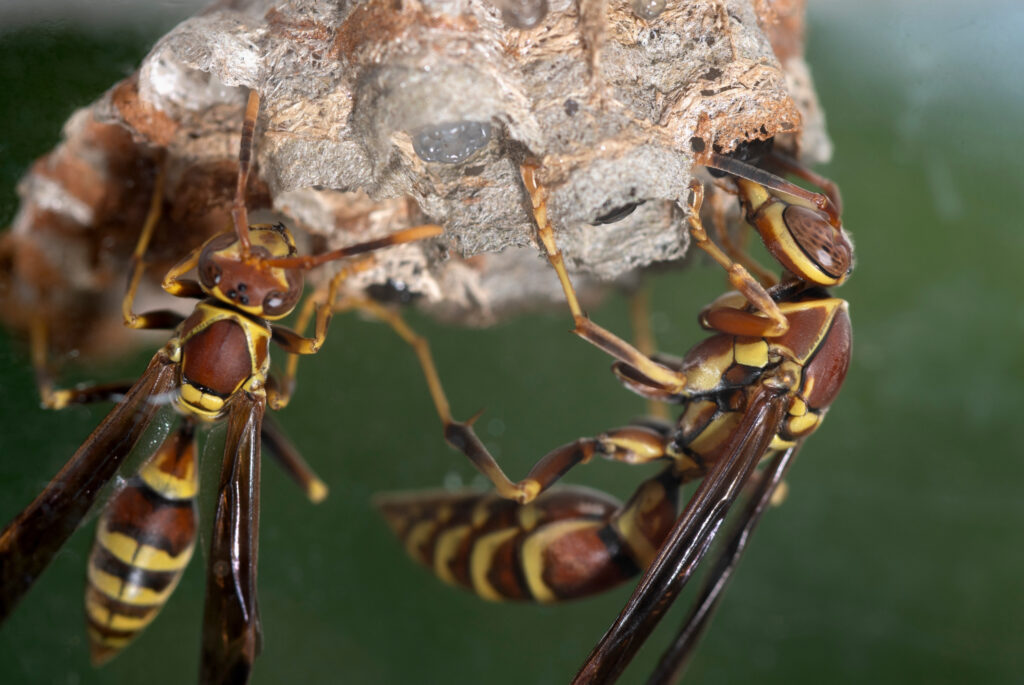
Wasps repeatedly entering one opening usually indicate a nearby nesting location.
Growing colonies can turn occasional patio activity into a daily problem.
Why San Bernardino Backyards Give Wasps What They Need
San Bernardino’s warm, dry conditions can make residential properties especially attractive to wasps during the warmer months.
Natural water becomes harder to find as temperatures climb, but residential yards continue providing dependable moisture. Irrigation lines, swimming pools, leaking hose bibs, dripping air-conditioning condensate, bird baths, and pet bowls can all become regular water stops.
Then there is food.
Wasps may investigate barbecue grease, meat scraps, sugary drinks, ripe fruit, recycling containers, outdoor trash, and even other insects living in the landscaping.
Wasps become active around San Bernardino patios because heat, moisture, available food, and sheltered construction provide dependable resources, which leads to repeated activity close to the home.
Sometimes the change is subtle.
You notice one wasp near the patio furniture in the afternoon. A few days later, there are two or three moving along the roofline. Eventually, you realize they are not wandering around randomly they keep returning to the same exact section of the house.
That repeated movement is one of the strongest clues that something nearby is supporting the activity.
The Nest May Be Hidden Where You Cannot See It
One of the biggest misconceptions about wasps is that every nest should be hanging visibly beneath an eave.
Many are not.
Around San Bernardino properties, nesting or sheltering activity may be found:
Beneath wood or aluminum patio covers
Behind fascia boards
Under roof tiles
Inside gaps between stucco and trim
Around attic and roof vents
Inside hollow patio posts
Behind security lights or exterior fixtures
Inside cracks and voids in block walls
Beneath barbecue islands
Inside storage sheds
Behind pool equipment
Within thick bushes or climbing plants
Around irrigation boxes
In abandoned underground holes
A homeowner can search the entire patio and still miss the actual source because the wasps may enter through an opening smaller than expected.
The flight pattern often tells more than the nest itself.
When several wasps fly toward the same roof edge, wall opening, or structural gap, there is usually a reason.
When Two Wasps Become a Backyard Problem
Consider a homeowner in San Bernardino who notices a couple of wasps near the patio in the late afternoon.
At first, it does not seem serious. There is no visible nest, and the wasps leave when everyone goes indoors.
Several days later, the homeowner notices one landing behind an exterior light fixture. Another disappears beneath the patio roof.
They spray the areas they can reach.
The following day looks better.
Then the activity returns.
Now wasps are showing up near the side yard, around the trash cans, and beside the sliding glass door.
You start seeing them in multiple areas instead of one isolated spot.
That is when you realize it is not just a couple of wasps passing through. There may be an active colony using the property every day.
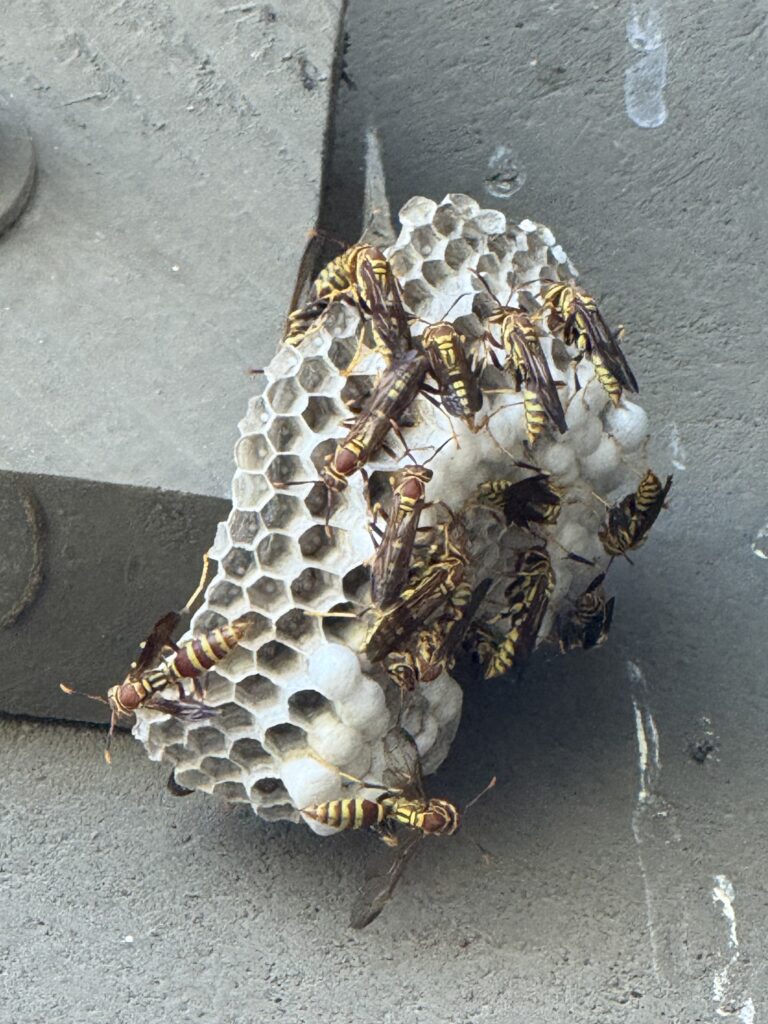
How Outdoor Wasp Activity Can Become an Indoor Concern
Patio wasp activity does not always stay outdoors.
Sliding doors, damaged window screens, attic vents, roof gaps, exterior fixtures, and openings around utility penetrations can give wasps opportunities to enter the structure.
An occasional wasp that flies through an open door is usually different from repeated indoor sightings.
If wasps keep appearing near the same ceiling, upstairs window, light fixture, fireplace, or wall, there could be activity inside an attic or structural void.
This situation requires caution.
Sealing an exterior entry point while an active nest is still inside can trap the wasps and cause them to look for another way out. In some cases, that new route can lead toward the interior of the house.
Proper control should address the active colony first and exclusion afterward.
Why Chasing Individual Wasps Rarely Solves the Problem
Most DIY treatments focus on the insects people can see.
That is also why many of them only provide temporary relief.
Aerosol sprays can kill exposed wasps, but they may never reach a nest inside a patio beam or roof void. Traps can capture foraging insects, but they do not automatically eliminate the colony producing them.
Removing a visible nest can help in certain situations, but even that may not resolve the entire problem if another nest is nearby or the property continues providing excellent nesting conditions.
There is also the sting risk.
Wasps can become defensive when their nesting area is disturbed. Spraying or knocking down an active nest from a ladder, doorway, or frequently used patio area can quickly turn a minor problem into a dangerous one.
Professional pest control in San Bernardino focuses on identifying the source instead of repeatedly treating individual wasps.
What Effective Wasp Control Actually Targets
Good wasp control starts with an inspection, not a spray can.
A technician should determine what type of wasp is present, where the insects are traveling, whether they are feeding or nesting, and which part of the property is supporting the activity.
Treatment may involve addressing an exposed nest, treating a concealed nesting location, removing accessible nest material when appropriate, and identifying areas that should later be sealed or repaired.
Long-term control also means reducing what attracts them.
Homeowners can help by:
Cleaning outdoor grills after use
Keeping trash and recycling containers closed
Removing fallen or overripe fruit
Repairing leaking faucets and irrigation fittings
Emptying unnecessary standing water
Bringing pet food indoors
Checking patio covers and eaves for new nests
Repairing damaged screens and exterior openings
These steps make the property less attractive, but an existing colony still needs to be addressed at the source.
The goal is not simply fewer wasps today. It is stopping the activity that keeps bringing them back tomorrow.
Handle the Nest Before Your Patio Becomes Off-Limits
Persistent wasp activity around a patio deserves attention, especially when the insects are gathering near a doorway, seating area, pool, barbecue, or walkway.
As a colony becomes more established, more workers can begin using the same area.
If you are seeing more than one wasp repeatedly traveling through the same section of your property, there are likely additional wasps or a nesting source you are not seeing.
Call TruPest Solutions at 951-334-5288 for fast service, affordable pricing, and local pest control experience in San Bernardino.
We inspect the property, follow the activity toward its source, and recommend treatment based on what is actually happening around your home.
Many homeowners notice a difference after the service.
Do not wait until someone gets stung or the patio becomes difficult to use. Call TruPest Solutions and get ahead of the colony.
Knowing Where to Look Makes the Difference
James, owner of TruPest Solutions, brings more than 18 years of pest control experience to homes throughout the Inland Empire.
Wasp control is one of those services where behavior matters.
A wasp gathering around a trash container tells a different story from several wasps entering the same gap beneath a roof tile. One may indicate feeding activity. The other may point directly toward a nest.
James looks at flight direction, frequency of activity, nesting material, defensive behavior, structural entry points, and surrounding food and water sources before determining how the problem should be treated.
That real-world experience helps distinguish between occasional wasp activity and a colony developing close to the home.
For homeowners looking for a San Bernardino exterminator, identifying that difference can be what separates a temporary reduction from lasting control.
San Bernardino Homes Offer Plenty of Hidden Wasp Shelter
San Bernardino has a wide variety of residential properties, and that variety creates plenty of different places for wasps to establish themselves.
Homes in North San Bernardino may have larger yards, mature trees, tile roofing, block walls, pools, and extensive landscaping. Older central neighborhoods may have aging fascia boards, detached garages, wooden patio covers, sheds, and structural gaps that have developed over time.
Neighborhoods near Verdemont, Rosena Ranch, Arrowhead Farms, and the foothill areas can also experience increased insect activity from surrounding open land and vegetation.
Side yards are especially important.
A narrow San Bernardino side yard can contain trash cans, hose connections, air-conditioning equipment, utility boxes, stored materials, and a gate all within a relatively small shaded space. That gives wasps shelter, moisture, and low-disturbance areas close to the house.
Block walls and tile roofing create additional protected voids that are easy for homeowners to overlook.
Combine those features with prolonged summer heat, backyard irrigation, pools, and outdoor entertaining, and a patio can become a dependable resource zone for wasps.
That is why bug control in San Bernardino should account for the individual home layout rather than treating every property the same way.
Warning Signs San Bernardino Homeowners Should Know
Why do wasps keep disappearing underneath my roof tiles?
Repeated entry beneath the same tile may indicate a protected nesting area or access to a roof void. Occasional activity is one thing, but multiple wasps repeatedly entering the exact same opening should be inspected.
Is it normal for wasp activity to get worse later in the summer?
Wasp colonies can become more noticeable as they grow and produce additional workers. Greater competition for food and water can also increase activity around patios, trash areas, pools, and outdoor meals.
Why am I seeing wasps near my pool every afternoon?
Pools provide a large, dependable water source during hot San Bernardino weather. Wasps may repeatedly return for water, especially if a colony is established somewhere nearby.
What does it mean if wasps are flying low around my yard?
Low flight can be associated with feeding, hunting insects, collecting water, or activity near a ground-level nesting site. If several wasps repeatedly enter the same hole or landscaping area, avoid disturbing it and have the area inspected.
When should indoor wasp sightings concern me?
One wasp near an open door may simply have flown inside. Repeated sightings in the same room, especially around ceilings, windows, lights, or upper walls, can indicate that wasps are entering through a structural gap or nesting somewhere inside the building envelope.
Do Not Give the Colony Another Week to Grow
Wasps rarely become a serious patio problem overnight. The activity usually builds gradually until homeowners begin changing how they use the yard.
First, you stop leaving drinks outside. Then you avoid one corner of the patio. Eventually, everyone starts watching the roofline whenever they step outdoors.
That is a sign the problem has gone far enough.
The most effective way to control wasps around San Bernardino patios is to find and treat the exterior nesting source before the colony becomes larger or begins affecting the interior of the home.
Call TruPest Solutions at 951-334-5288 for fast, affordable wasp control backed by local Inland Empire experience.
Get the source handled now so your patio can go back to being a place you actually want to use.