
Paper wasps become more noticeable in Rialto during summer because sustained heat, dry weather, irrigated landscaping, and sheltered home exteriors give them reliable places to build nests and find water. Most activity begins outside under roof eaves, patio covers, block-wall caps, sheds, and other protected surfaces. The safest way to get rid of paper wasps is to locate the active nest, remove it correctly, treat the surrounding nesting area, and monitor the property for additional colonies.
What Are Paper Wasps?
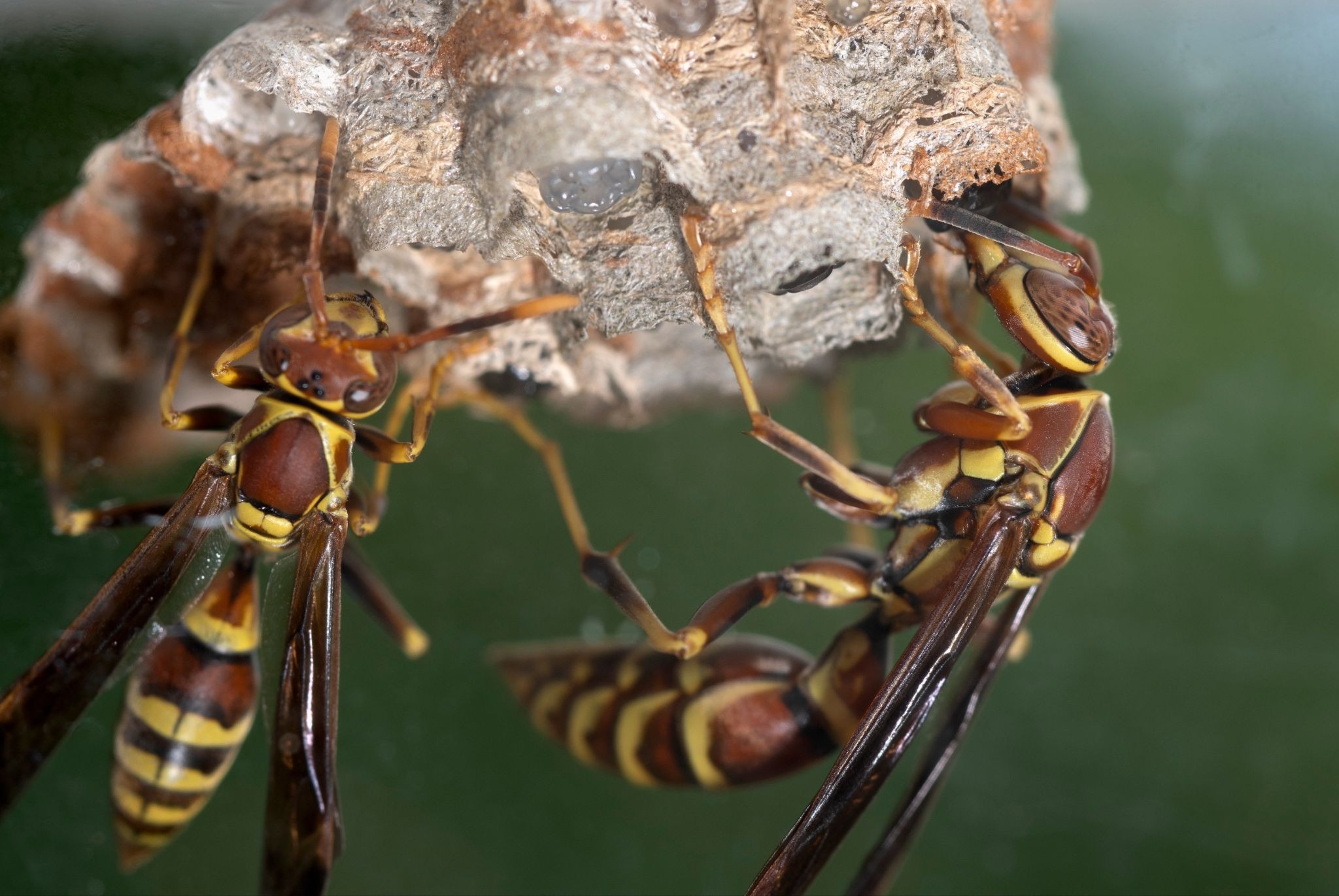
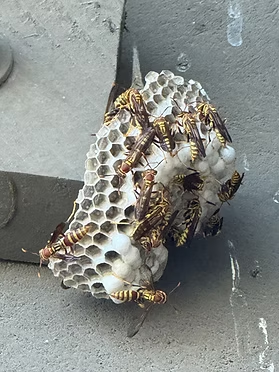
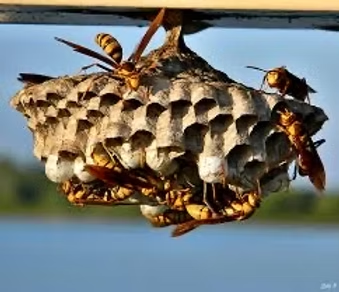
Paper wasps are slender, long-legged wasps that build exposed, umbrella-shaped nests from chewed wood fibers. Unlike enclosed hornet nests, a paper wasp nest usually has visible hexagonal cells and hangs from a narrow stalk.
They are often reddish-brown, dark brown, or black with yellow markings. One of their most recognizable features is the way their legs hang beneath them while they fly.
Paper wasps help control caterpillars and other insects, but a nest becomes a serious concern when it is built close to doors, patios, play areas, walkways, or places where people regularly work.
The Nest You Do Not Notice in Spring Becomes a Summer Problem
A paper wasp problem rarely begins with dozens of wasps circling the yard. It usually starts quietly.
A queen selects a protected surface in spring and begins constructing a nest that may initially be smaller than a golf ball. Because there are only a few wasps present, the activity is easy to overlook. The nest may be hidden behind a patio beam, beneath a second-story eave, inside a barbecue island, or behind stored items in the side yard.
As temperatures rise, the first workers mature and begin helping with nest construction, food collection, and defense. The colony can then expand much faster.
By the middle of summer, the homeowner who occasionally noticed one wasp may suddenly see several flying between the roofline, lawn, garden, and swimming pool.
That is when a small exterior nest becomes a daily safety issue.
Why Rialto Summers Encourage Paper Wasp Activity
Rialto’s summer conditions give paper wasps nearly everything they need. Long stretches of hot, dry weather allow colonies to remain active, while irrigated lawns, dripping hose bibs, swimming pools, pet bowls, air-conditioning condensation, and overwatered planters provide moisture.
Rialto homes also offer abundant nesting surfaces. Stucco eaves, Spanish-style roof tiles, wood patio covers, block walls, sheds, pergolas, meter boxes, and covered entryways all create shade and protection from wind.
Paper wasps show up around Rialto homes because summer heat increases their need for water while protected exterior surfaces provide nesting sites, which leads to more wasp traffic around yards, patios, and entry doors.
The same pattern occurs throughout the Inland Empire, including Fontana and San Bernardino, but the combination of Rialto’s hot afternoons, established neighborhoods, block-wall properties, and irrigated landscaping makes summer paper wasp activity especially noticeable.
Paper wasp problems in Rialto homes usually begin outdoors around rooflines, patio covers, walls, and landscaping.
Paper wasp colonies grow as the queen produces workers that expand and defend the nest throughout summer.
Indoor paper wasp sightings often begin when exterior activity develops near doors, vents, attic openings, or gaps around the roofline.
Where Paper Wasps Build Nests Around a Property
Paper wasps prefer locations that protect their open nests from direct sunlight, sprinklers, and strong wind. Their nests are not always hanging in plain sight.
Around Rialto homes, we frequently look beneath second-story eaves, roof overhangs, rain gutters, fascia boards, patio furniture, playground equipment, porch ceilings, and wood patio covers.
They may also build behind exterior light fixtures, inside open utility boxes, beneath block-wall caps, under pool equipment lids, inside sheds, behind shutters, under barbecue counters, and between stored items.
Side yards are especially common problem areas. They often contain trash containers, ladders, gardening equipment, water heaters, air-conditioning units, and storage bins. Because homeowners do not spend much time examining these spaces, a nest can continue growing without being disturbed.
A wasp repeatedly disappearing behind a beam, roof tile, fence post, or utility opening should not be ignored. Repeated flight to one specific location usually means the insect has a reason to return.
How One Nest Creates Multiple High-Risk Areas
The nest itself may be in one location, but the wasps do not stay beside it all day. Workers travel through the property searching for insects, moisture, wood fibers, and other resources.
That movement can create activity near several parts of the home.
You may first notice a wasp drinking from a wet planter. A few days later, another appears around the patio furniture. Soon, wasps are flying across the doorway, circling the pool, and landing on the block wall.
You start seeing them in multiple areas, even though you still cannot find the nest.
That is when you realize it is not just one random wasp passing through the yard. There is likely an established nesting site nearby, and the workers are using your property as part of their daily route.
A single mature nest can also make certain parts of the yard difficult to use. Children playing near a nest, dogs investigating a low structure, gardeners trimming a shrub, or homeowners moving patio furniture may unknowingly trigger defensive behavior.
A Familiar Summer Scenario for Rialto Homeowners
Imagine stepping outside on a Saturday morning to clean the patio. You notice one wasp circling the corner of the cover, but it flies away, so you continue working.
The following week, you see two more wasps near the same beam. One disappears into the narrow space above it. You spray the area from several feet away and assume the problem is handled.
A few days later, wasps are still returning.
Then someone opens the side gate, bumps the patio structure, or starts trimming a nearby plant. Several wasps emerge at once and begin flying defensively around the area.
The nest had been developing behind the beam where it could not be seen from the ground. Spraying the visible wasps never reached the colony or addressed the protected nesting surface.
This is a common reason homeowners searching for an exterminator in Rialto eventually call for professional help. The visible activity is only part of the problem.
How Paper Wasps Get From Outside to Inside
Paper wasps are primarily outdoor pests, but they can still enter a home.
A nest near an exterior door can result in wasps slipping inside whenever the door opens. Activity near attic vents, damaged screens, roof gaps, recessed lighting, or openings around utility lines can also allow wasps into enclosed areas.
Sometimes a nest is built inside a protected structural opening rather than directly inside the living space. Individual wasps may then follow light, airflow, or temperature changes toward the interior.
Homeowners may find them near upstairs windows, sliding doors, skylights, garages, laundry rooms, or rooms below attic spaces. A wasp moving slowly near a window does not necessarily mean the nest is in that room. It may have entered from an exterior colony and become trapped while trying to return outside.
Repeated indoor sightings, especially in the same area, deserve closer inspection.
Why DIY Paper Wasp Control Often Falls Short
A can of wasp spray may kill insects it directly contacts, but that does not mean the entire problem has been solved.
Homeowners often spray from the ground without being able to see the nest clearly. The material may hit the edge of an eave while the colony remains protected behind a beam, roof tile, wall cap, or fixture.
Another common mistake is knocking down a nest without treating or monitoring the surrounding area. Surviving wasps may rebuild nearby, and a different queen may select the same protected surface later.
Hosing a nest, striking it with a broom, sealing an active opening, or using a household aerosol at close range can also provoke defensive behavior. Paper wasps are most dangerous when they believe the nest is being threatened.
DIY efforts become even less reliable when more than one nest is present. Removing the obvious nest near the patio does not address a second nest beneath the eaves or behind the shed.
Effective bug control in Rialto requires more than reacting to the first wasp you see. It requires identifying where the activity originates and determining why the property continues attracting it.
What Professional Paper Wasp Control Actually Addresses
Long-term control begins with a thorough exterior inspection.
A pest control professional follows wasp flight patterns, examines likely nesting surfaces, identifies active colonies, and checks secondary areas that homeowners commonly overlook. The nest is then handled using a treatment method appropriate for its location and level of activity.
The surrounding structure also matters. Treating the nesting zone can help reduce continued activity and discourage immediate rebuilding. Once the colony is inactive, accessible gaps or damaged screens may need to be corrected to lower the risk of indoor entry.
Ongoing prevention includes checking rooflines, patio structures, wall caps, utility areas, storage spaces, and other protected surfaces before colonies become large.
This is especially important during Rialto’s extended warm season. Waiting until the nest is crowded with workers makes removal more complicated and increases the chance of someone being stung.
For homeowners researching how to get rid of paper wasps in the Inland Empire, the most dependable strategy is early detection, targeted exterior service, nest removal, and continued monitoring.
Do Not Let a Hidden Nest Control How You Use Your Yard
Paper wasp colonies become more defensive and difficult to approach as they grow. Taking action while the nest is still small can prevent weeks of increasing activity around your doors, patio, driveway, or side yard.
If you are seeing more than one wasp returning to the same area, there is likely more activity you are not seeing.
TruPest Solutions provides fast service, experienced local pest control, and affordable pricing for homeowners dealing with paper wasps in Rialto, California. We inspect the areas where nests actually develop instead of simply spraying the insects flying through the yard.
Many homeowners notice a clear difference after the very first service.
Call TruPest Solutions at 951-334-5288 before the nest grows larger or someone accidentally disturbs it.
James Recognizes the Flight Patterns That Reveal a Hidden Nest
James, owner of TruPest Solutions, has 18 years of pest control experience and understands how paper wasp behavior changes throughout the Inland Empire summer.
Locating a paper wasp colony involves more than looking for an exposed nest. The direction of flight, the height of the activity, the frequency of returning workers, and the structure they disappear behind can all help identify where the colony is developing.
For example, wasps repeatedly landing on a block wall may be collecting moisture or wood fibers rather than nesting there. Wasps consistently flying to the same roof corner, however, may indicate a protected colony beneath a tile or fascia edge.
That real-world understanding helps separate general backyard activity from a nest that needs immediate attention. James built TruPest Solutions to give local homeowners careful, knowledgeable service without inflated pricing or rushed treatments.
Why Rialto Properties Need a Different Kind of Wasp Inspection
Rialto is not made up of one type of property. Older homes near central Rialto may have aging eaves, detached garages, mature trees, and narrow side yards filled with storage. North Rialto properties may include larger patio structures, tile roofs, swimming pools, decorative walls, and extensive landscaping.
Homes near Baseline Road, Riverside Avenue, Foothill Boulevard, and neighborhood streets throughout the city often have block walls separating adjoining yards. Those walls create protected corners, capped openings, and warm surfaces where paper wasps can rest or build.
Hot afternoon temperatures also push wasps toward shaded structures and dependable water sources. A small irrigation leak, damp lawn edge, fountain, pool, or air-conditioning drain may attract steady activity even when the nest is located elsewhere.
Our Rialto pest control inspections account for these local layouts and weather patterns. We check the places paper wasps favor in actual Inland Empire homes rather than relying on a generic spray around the perimeter.
What Rialto Homeowners Want to Know About Paper Wasps
Why do paper wasps return after a nest is knocked down?
The nesting surface may still be attractive, surviving wasps may remain nearby, or another active nest may be present elsewhere on the property. Removing the visible comb without addressing the surrounding activity does not always prevent rebuilding.
How can I tell a paper wasp nest from another type of wasp nest?
Paper wasp nests usually look like a small, upside-down umbrella made of exposed paper cells. They do not have the fully enclosed outer shell associated with many hornet nests. Because identification can be difficult from a distance, avoid approaching an active nest for a closer look.
Does one paper wasp inside mean there is a nest in the house?
Not necessarily. A single wasp may have entered through a door, vent, damaged screen, or roof gap. However, repeated sightings in the same room or near the same window can indicate an exterior colony or structural opening that should be inspected.
What are the signs that paper wasp activity is getting worse?
Increasing numbers of wasps, repeated flights to one location, activity in several parts of the yard, visible nest growth, or defensive behavior near a structure all suggest the colony is becoming more established.
Will paper wasps leave when summer ends?
Colony activity usually declines as seasonal conditions change, but waiting can leave your family exposed throughout the hottest and most active part of the year. New queens may also seek protected locations nearby, allowing the issue to return during the next warm season.
Take Back the Patio Before the Colony Gets Bigger
A paper wasp nest may begin with only a queen and a few exposed cells, but summer conditions allow it to become a much larger problem. The longer the colony remains undisturbed, the more workers it can produce and the more aggressively it may defend the nesting area.
The most effective way to control paper wasps in Rialto is early exterior treatment that removes the active source and helps discourage rebuilding.
Do not wait until wasps are flying across multiple areas of the property or someone gets stung while opening a gate, trimming a plant, or sitting beneath the patio cover.
Call TruPest Solutions at 951-334-5288 for fast, affordable paper wasp control backed by local Inland Empire experience.